

Home Inspection vs. Appraisal
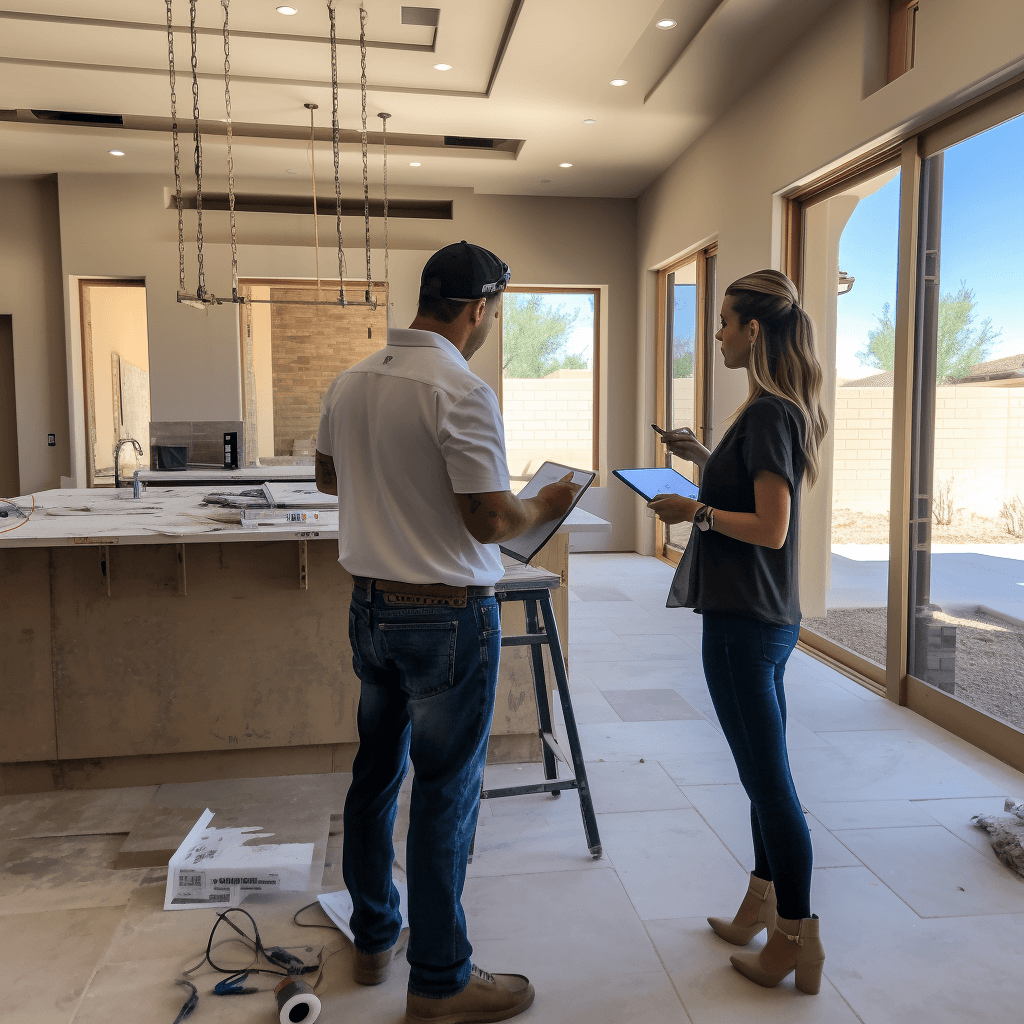
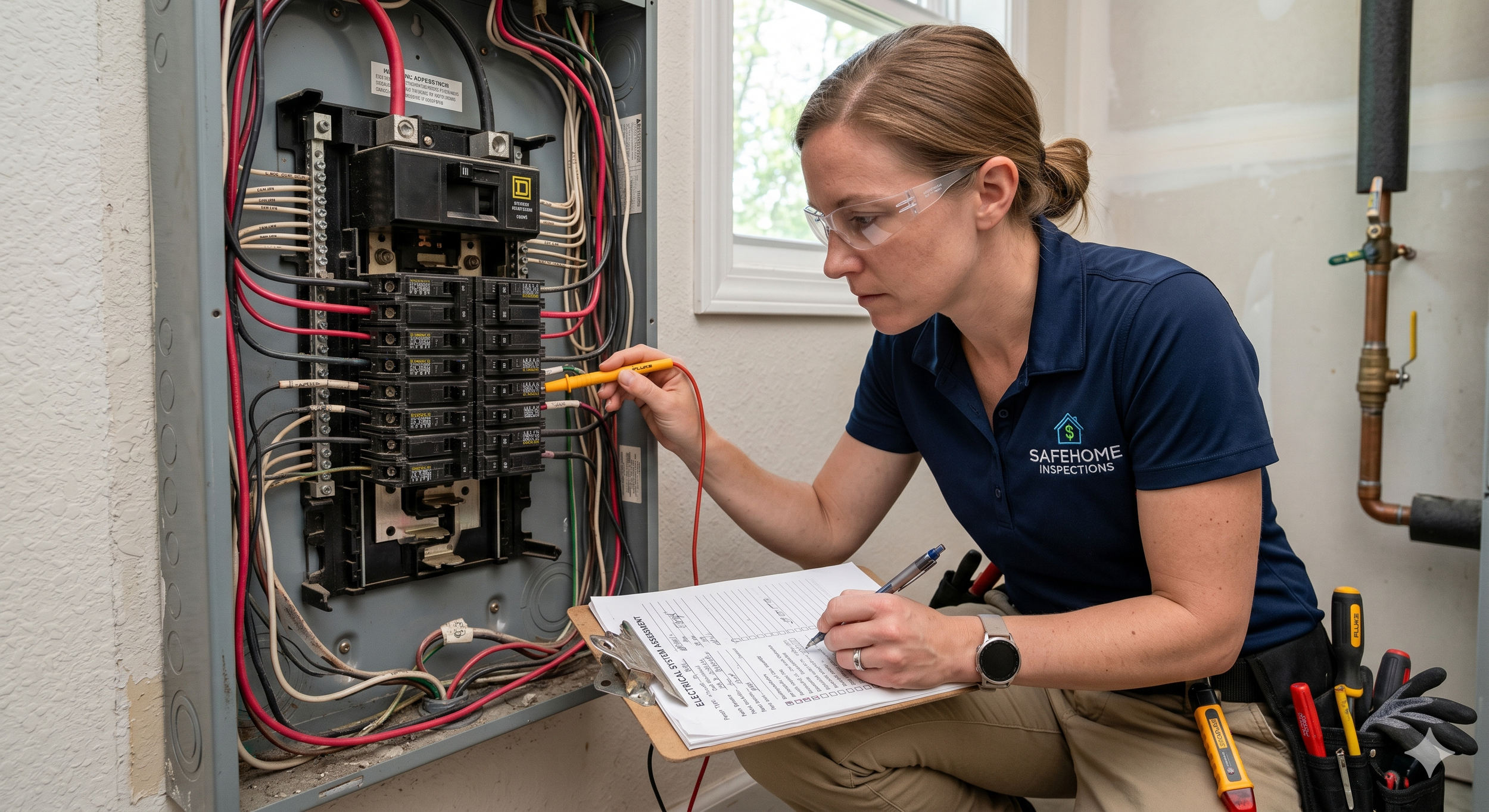
Side-by-side comparison of home inspector examining property systems and appraiser evaluating home value
Understanding the difference between a home inspection and an appraisal is crucial for buyers navigating the real estate transaction. While both are professional evaluations of a property, they serve entirely different purposes and require different expertise.
A home inspection focuses on the condition and functionality of the property's systems and components. The home inspector examines the structural integrity, roof condition, HVAC systems, plumbing, electrical systems, windows, doors, and other visible components. The inspection report identifies defects, safety concerns, and items needing repair or maintenance.
Buyers use this information to negotiate repairs or credits before closing. An appraisal, by contrast, determines the property's market value for lending purposes. The appraiser compares the property to similar homes recently sold in the area to establish a fair market value. This valuation protects the lender by ensuring the property is worth the loan amount. Appraisals don't typically address maintenance issues or repair needs—they focus purely on value.
Key differences include purpose (inspection = condition; appraisal = value), professional background (inspector = systems expert; appraiser = market analyst), report contents (inspection = defects; appraisal = comparable sales), and cost (inspection typically $300-650; appraisal $300-500). Both are typically required in standard transactions, but they answer different questions about the property.
How Long Does a Home Inspection Take in Arizona?
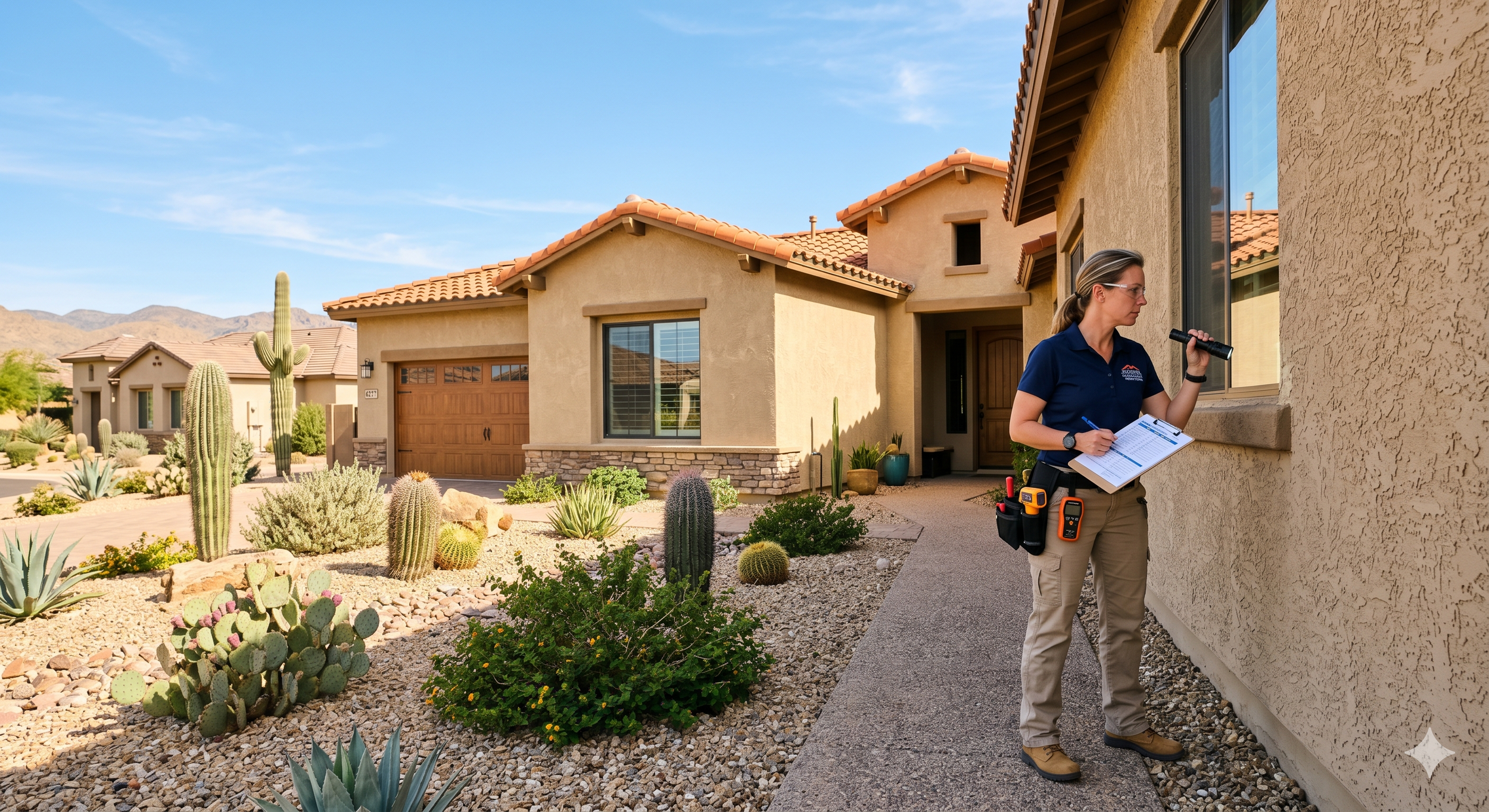
Home inspector examining stucco exterior of Arizona house with desert landscaping under bright sunlight

A standard home inspection in Arizona typically takes 2 to 4 hours, though the duration can vary based on several factors. The size of the property is the most significant determinant—smaller homes may be inspected in as little as 2 hours, while larger homes or multi-story properties might require 4 hours or more.
Additional time may be needed for homes with complex systems, older properties with potential issues, or those with extensive square footage.
Several variables influence inspection duration. The inspector's experience level plays a role; seasoned professionals often work more efficiently than newer inspectors. The condition of the property also matters—homes requiring more detailed examination of problem areas naturally take longer.
Arizona-specific factors like inspecting pool equipment, evaluating stucco conditions, and checking for desert-related issues can add to the timeline.
It's important to note that inspectors cannot rush through a thorough examination. A comprehensive inspection involves testing multiple systems, documenting conditions, and taking photographs.
Buyers should expect the full duration and plan accordingly, particularly when scheduling follow-up appointments or coordinating with other parties involved in the transaction.
Stucco Inspection in Arizona
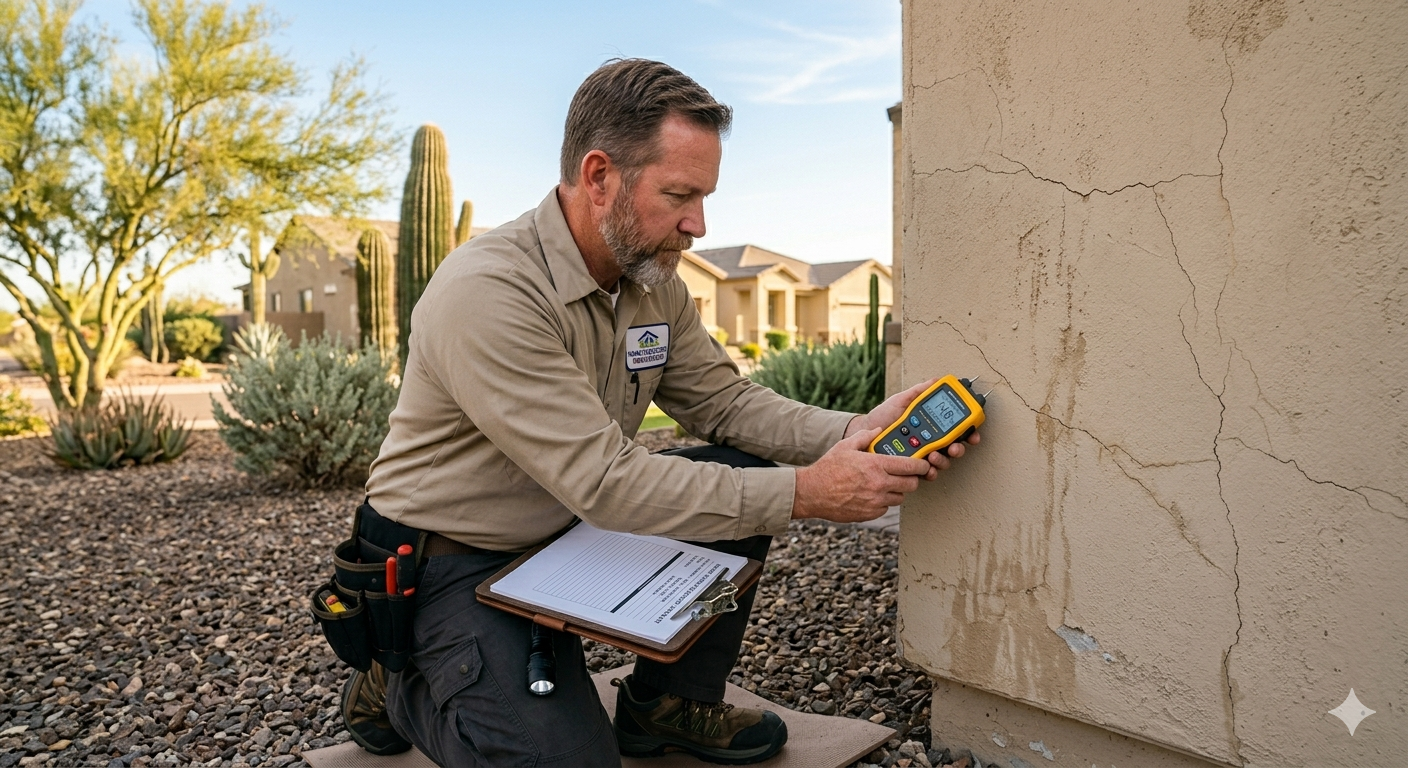
Home inspector testing stucco moisture levels on Arizona desert home exterior
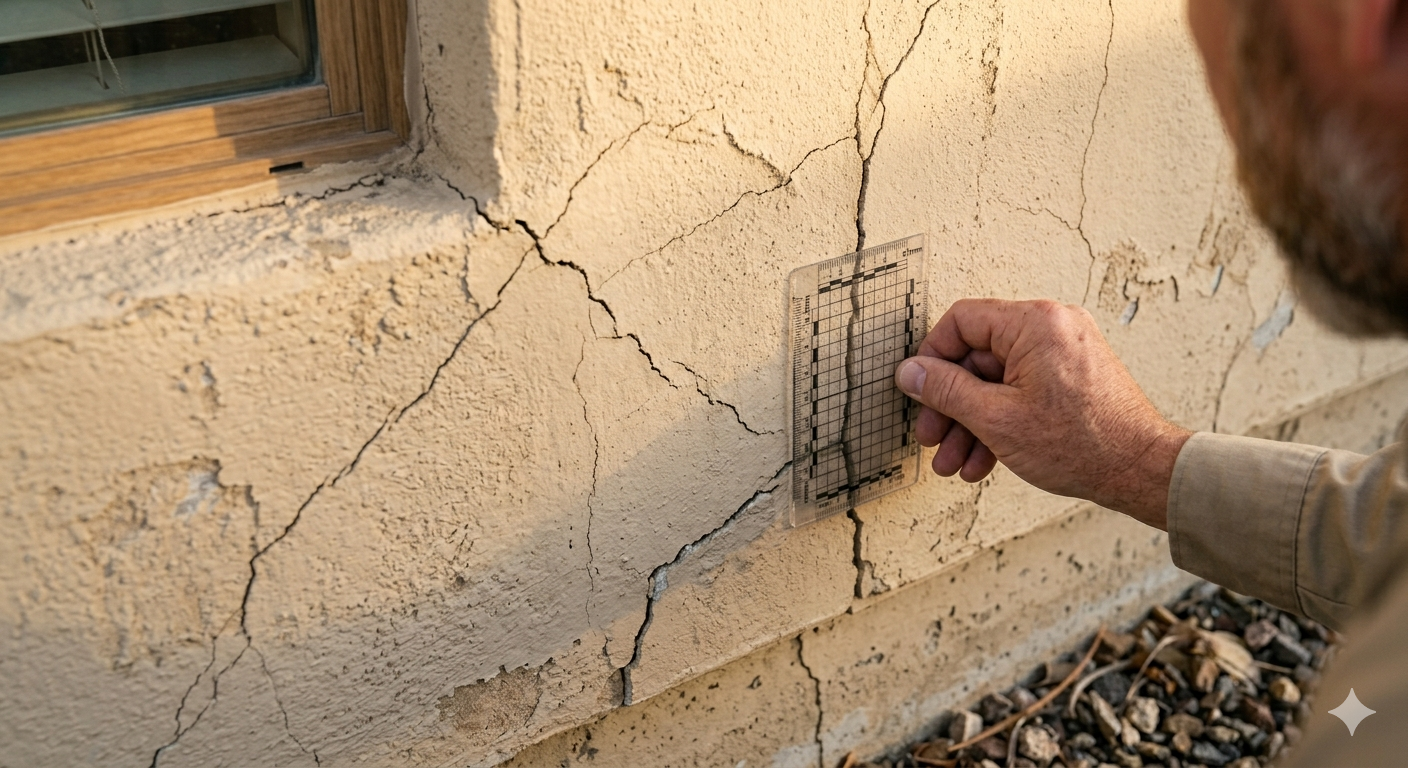
Stucco exterior systems are extremely common in Arizona but require careful inspection due to potential issues unique to desert climates. Stucco problems can be expensive to remediate, making inspection particularly important.
During a standard home inspection, the inspector evaluates the stucco exterior. They look for cracks, evidence of water intrusion, soft or deteriorated areas, and signs of underlying problems. However, detailed stucco evaluation often requires a specialized inspector.
A specialized stucco inspection involves moisture testing, examination of underlying structure, and detailed assessment of stucco condition. Inspectors use moisture meters to identify water penetration that may not be visible. Cost ranges from $400-$800.
Arizona-specific stucco concerns are significant. Thermal expansion and contraction from extreme temperature swings can create cracks. Monsoon rains, despite Arizona's generally dry climate, can cause water intrusion through cracks or failed sealants. Arizona's intense UV exposure can degrade stucco and sealants. Hard water and mineral deposits can affect stucco integrity.
Common stucco problems include:
- Cracks allowing water intrusion (moisture damage, mold, rot)
- Stucco separation from underlying structure
- Failed sealants around windows, doors, and penetrations
- Discoloration from water stains or mineral deposits
- Soft or crumbling stucco areas
If stucco problems are identified, repair costs depend on severity. Small crack repairs and re-sealing might cost $500-$2,000. Extensive stucco remediation requiring removal and replacement can cost $10,000-$30,000 or more.
For Arizona homebuyers, stucco inspection is particularly important. If the home has stucco (most do), request a detailed inspection. If significant issues are found, negotiate credits or repairs before purchase.

How to Negotiate Repairs After a Home Inspection in Arizona
Arizona homebuyers and real estate agent reviewing home inspection report during repair negotiations

After a home inspection in Arizona reveals issues, the negotiation process begins. Understanding how to effectively negotiate repairs—or credits if repairs won't be made—is essential for protecting your interests.
Arizona's Buyer Inspection Notice and Seller Response (BINSR) process governs repair negotiations. After the inspection, the buyer submits a notice of defects to the seller. The seller then has a specified time (typically 5-7 days) to respond. The seller can agree to repair items, offer credits instead of repairs, or refuse to address issues entirely.
Effective negotiation starts with prioritization. Don't request repairs for every minor finding.
Focus on significant issues affecting safety, habitability, or major systems. Sellers are more likely to agree to substantial requests when you're not nickel-and-diming them over cosmetic issues.
Get repair estimates for major items. If you're requesting repairs, providing cost estimates strengthens your position. Sellers are more likely to accept reasonable repair requests when they understand actual costs rather than making estimates themselves.
Consider credits instead of repairs in some situations. If the seller is reluctant to perform repairs, requesting a credit toward closing costs may be more achievable. This credits you money at closing to use toward repairs of your choosing post-purchase. This arrangement actually gives you more control—you choose the contractor and ensure work is done to your satisfaction.
Distinguish between mandatory and negotiable items. Safety issues and significant defects are worth firm negotiation. Cosmetic wear, minor repairs, and maintenance items are less critical to request.
Be prepared to compromise. If the seller agrees to address most major items but refuses one, consider whether that single item justifies potentially losing the deal. Negotiations involve give-and-take.
Understand that Arizona law doesn't require sellers to make any repairs. You're negotiating, not demanding. Sellers can refuse all requests. If parties can't agree, the buyer can terminate the contract during the inspection period without penalty.
Timing matters. Submit your repair notice promptly. Delayed requests lose negotiating power because the seller may feel the timeline is being manipulated.
The Arizona Home Buyer's Complete Guide to the Inspection Process
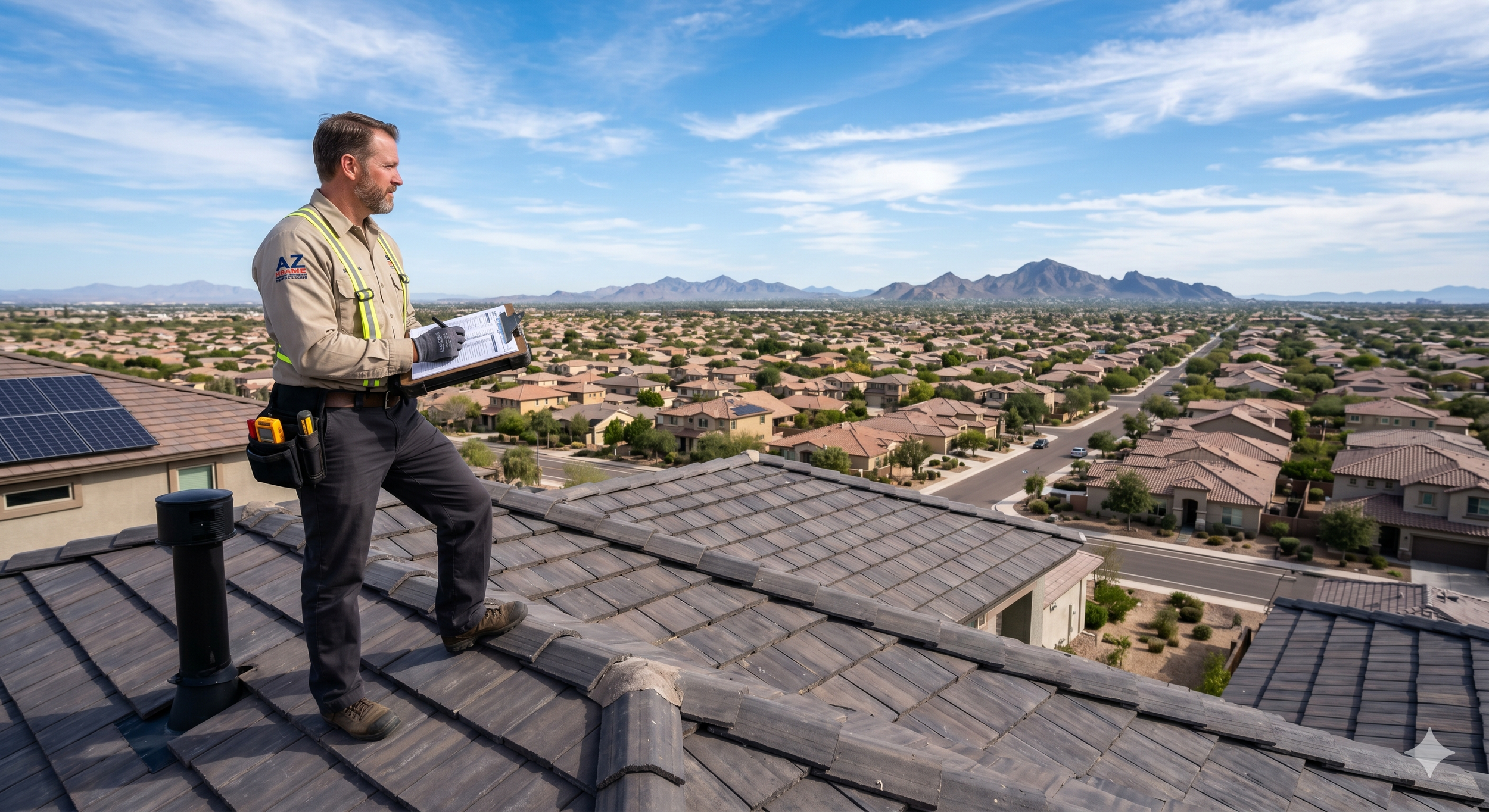
Home inspector on Arizona tile roof overlooking Phoenix suburb during residential inspection

Buying a home in Arizona is complex, and the inspection process is one of the most critical phases. From the moment your offer is accepted to walking away from closing, the inspection determines whether you're buying with confidence or discovering expensive problems after you own the house. This guide walks you through every step of the inspection process so you know what to expect, what to ask for, and when to walk away.
Step 1: Your Offer Gets Accepted
The inspection process officially starts when your offer is accepted. At this moment, your real estate agent should discuss inspection contingencies with you. Most Arizona contracts give buyers 10 business days for inspection and renegotiation, though this is negotiable.
This 10-day window is critical. You need to schedule the inspection immediately, review the report, identify problems, and renegotiate with the seller before the contingency closes. Many buyers waste time and lose their negotiating power by waiting.
Step 2: Schedule the Inspection Immediately
The moment your offer is accepted, contact your home inspector and schedule. Don't wait a few days. The sooner you inspect, the sooner you get your report, and the more time you have to negotiate.
How to Choose a Home Inspector
Choosing an inspector is about credentials, experience, and communication. Ask for references from your real estate agent, and reach out to your lender or title company for recommendations.
Ask the 10 key questions before hiring so you understand their process and scope.
In Arizona, verify that your inspector holds an Arizona Home Inspector license. Check their professional certifications. Ask how many inspections they've completed in your area. A good inspector should put you at ease and answer all your questions clearly.
What to Schedule (Standard Inspection, Termite, Sewer, Pool, etc.)
The standard home inspection covers structure, systems, and major components. But you'll likely need additional specialty inspections depending on the home.
For most Arizona homes, add termite inspection. Termites are common, and a termite inspection is separate from the standard inspection. Add sewer scope if the home has a septic system or if the sewer line is old. Add pool inspection if the home has a pool, spa, or outdoor water features.
Radon testing should be included in every Arizona inspection. Radon testing in Arizona is inexpensive and important for your family's health.
Mold testing is optional but worth considering if the home has had water damage, shows mold growth, or if you have respiratory sensitivities. Roof inspection is worth adding if the roof is over 15 years old or shows visible damage.
Step 3: Inspection Day
Inspection day is when you learn what you're actually buying. Most inspections take 2-4 hours depending on the home's size and age.
What to Expect
Your inspector will methodically go through every system. They'll test the electrical panel, run water in every sink, open every cabinet, inspect the roof, check the HVAC system, examine the foundation, review the attic, and look at every visible component of the home.
In Arizona, your inspector will specifically look for issues like expansive soil movement in the foundation, hard water damage on plumbing, HVAC performance in desert heat conditions, stucco and exterior integrity, and roof condition for monsoon resistance.
They'll document everything with photos and notes. They'll identify minor wear and tear and major defects. They'll recommend next steps for problem areas.
How Long It Takes
Plan for 2-4 hours, depending on the home's size and condition. Larger homes take longer.
Homes built before 1990 often take longer because they have more complex systems and more potential issues. New construction might be faster because systems are newer, but you should still allow the full time.
Don't rush the inspection. If your inspector is done in 90 minutes for a standard home, they're not being thorough.
Should You Be There?
Yes, attend your inspection. You want to see the home's systems with your own eyes, ask questions in real time, and understand what the inspector is finding. Being present gives you direct insight into the home's condition and helps you make better decisions later.
During the inspection, ask questions about anything you don't understand. A good inspector welcomes questions and explains findings clearly.
Step 4: Review Your Inspection Report
The inspection report is your foundation for negotiation. You'll typically receive it within 24 hours of the inspection. Take time to read it carefully and understand the findings.
Major vs. Minor Findings
Inspection reports categorize findings by severity. Minor findings are cosmetic or wear-and-tear issues like a loose caulk bead, missing gutter guards, or weathered exterior paint. Major findings are structural, system, or safety issues like foundation cracks, failing AC systems, electrical hazards, or plumbing leaks.
Minor findings are expected in any home and usually not worth renegotiating. Major findings are worth addressing through negotiation.
Arizona-Specific Concerns
In Arizona, pay special attention to findings related to foundation settlement and expansive soil, hard water damage and plumbing corrosion, AC system age and performance, stucco and exterior water intrusion, roof condition for monsoon season, and radon levels.
A few diagonal cracks in stucco are normal. Multiple cracks or separation between stucco and trim warrant closer inspection. A 15-year-old AC system in a Phoenix home is aging and should factor into negotiation. Hard water stains on fixtures with visible copper corrosion indicate hidden plumbing problems.
Step 5: Negotiate Using the BINSR
BINSR stands for "Buyer's Inspection Negotiation Summary Report." It's the document your agent prepares after reviewing the inspection, summarizing major findings, and determining what to ask for.
What to Ask For
After reviewing the inspection, you have three main options: ask the seller to repair major items before closing, ask for a credit toward closing costs to handle repairs yourself, or accept the home as-is.
Most Arizona negotiations involve asking for repairs of major systems or requesting credits. For a 15-year-old AC system, you might ask for repair or credit toward replacement. For foundation cracks, you might ask for a structural engineer's evaluation at the seller's expense. For plumbing corrosion, you might ask for credit toward replumbing.
Be specific in your request. Don't just say "fix the AC." Say "repair or replace the AC system to properly cool the home in Phoenix summer heat."
Credit vs. Repair
Getting a credit is often better than asking the seller to repair. Sellers often use the cheapest contractor to make repairs before closing. You'll be stuck with the work. A credit lets you hire a qualified contractor and oversee the work.
However, some repairs (like foundation structural issues or major roof work) are better handled by the seller while they own the home.
When to Walk Away
Some findings are deal-breakers. If the inspection reveals structural problems requiring expensive repair, extensive termite damage, major mold issues, or significant foundation movement, the cost of repairs might exceed your budget. You have the right to walk away if the home's true condition makes it a bad deal.
Foundation repair can cost $10,000 to $50,000. Major replumbing can cost $5,000 to $15,000.
Extensive roof replacement can cost $8,000 to $20,000. If the inspection reveals multiple major issues, the total cost might make the home unaffordable.
Your inspection contingency gives you this exit. Use it if the home doesn't meet your expectations or budget.
Step 6: Additional Inspections to Consider
Beyond the standard inspection, specialty inspections add important information for specific
homes.
Termite Inspection
A [termite inspection] is separate from the standard inspection. Termites are common in Arizona, and damage
can be expensive. Most lenders require termite inspection for loans, so budget for this. Cost is typically $100-$150.
Sewer Scope
If the home has a septic system or if you're concerned about the main sewer line, a sewer scope inspection is worth adding. A camera runs through the sewer line to check for cracks, roots, or blockages. Cost is typically $300-$500. This is especially important for older homes.
Pool Inspection
Homes with pools need specialized inspection. A pool inspection checks equipment, water chemistry, structure, and safety systems. Cost is typically $200-$400.
Mold Testing
Mold testing is optional but valuable if the home has had water damage, shows visible mold, or if you have health sensitivities. Testing costs $300-$600. Only test if you have specific reason to suspect a problem.
Radon Testing
Radon testing in Arizona should be part of every inspection. Short-term testing costs $150-$300 and provides results before your inspection contingency closes. All Arizona homes should be tested.
Roof Inspection
If the roof is over 15 years old or shows visible damage, a specialized roof inspection is worth adding. A roof inspection checks shingle condition, flashing, ventilation, and structure. Cost is typically $200-$400.
Step 7: Final Walkthrough Before Closing
After inspection and renegotiation, you'll do a final walkthrough 24-48 hours before closing. This walkthrough confirms that agreed repairs were completed, agreed-upon items were removed, and no new damage occurred since inspection.
Bring your inspection report to the final walkthrough. If the seller agreed to repair the AC, verify the repair was completed. If they agreed to credit you for repairs, confirm no additional damage occurred.
Don't skip the final walkthrough. It's your last chance to catch problems before closing.
Step 8: Closing Day
Closing day is when the home officially becomes yours. You'll sign documents, transfer funds, and receive keys. By this point, you've inspected thoroughly, negotiated any needed repairs, and verified the home's condition.
Arizona closing typically happens at a title company. Your real estate agent and lender will guide you through the process. After closing, the home is yours, and the inspection contingency ends.
Start Your Home Inspection Process Today
The inspection process is your protection against expensive surprises. From scheduling immediately after offer acceptance to understanding your report to negotiating confidently, these steps guide you from offer to closing.
You need a qualified inspector who understands Arizona homes, knows how long an inspection takes, explains the difference between home inspection and appraisal, can clarify who pays for the home inspection, and knows what findings are mandatory fixes after inspection.
You also need to understand how to read your inspection report, know when to walk away, understand sewer scope inspection, get specialized mold inspection, and schedule termite inspection.
Specialty inspections like pool inspection, roof inspection, and radon testing provide critical information for specific homes.
To [negotiate effectively after inspection, ask the right questions before hiring an inspector.
Desert State Home Inspections has completed hundreds of inspections across Arizona, from Scottsdale home inspections to Phoenix home inspections to Mesa home inspections and Gilbert home inspections. We understand Arizona's construction, climate, soil conditions, and common issues.
We'll walk through your home thoroughly, explain our findings clearly, and provide a detailed report you can trust. You'll know exactly what you're buying and what to budget for after closing.
Schedule your home inspection today. Call Marc at (480) 585-6456, or book online. Start your inspection process with confidence.
Questions to Ask Your Home Inspector Before You Hire
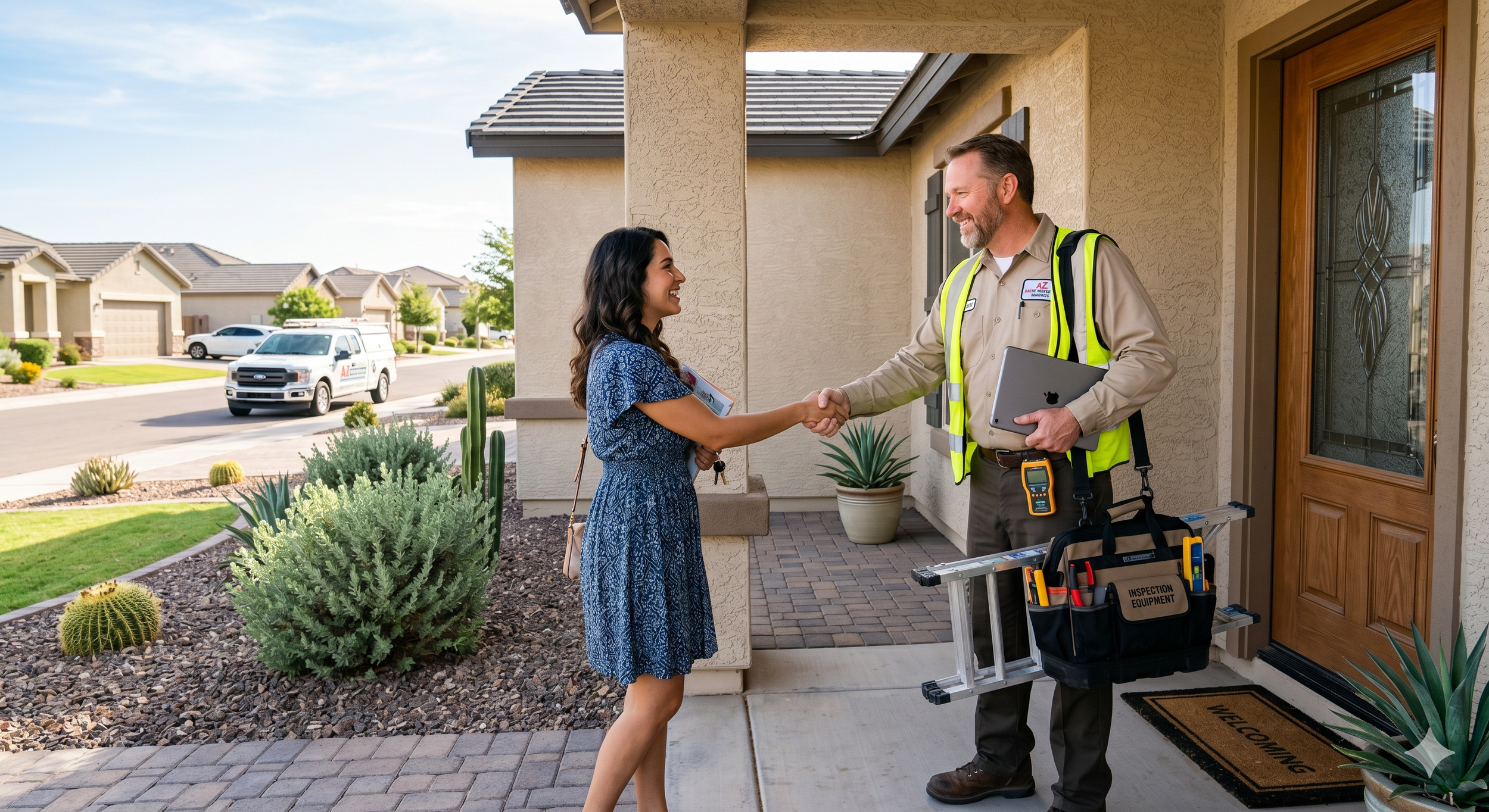
Professional home inspector greeting Arizona homebuyer before inspection begins

Picking the right home inspector is one of the most important decisions you'll make in a real estate transaction. A good inspector catches problems that protect you and your wallet. A bad one misses critical issues, costs you money, and damages your confidence in the home you bought. Before you hire an inspector, ask these 10 questions to make sure you're getting a qualified professional.
What Certifications and Licenses Do You Hold?
Arizona requires home inspectors to be certified through the state. Ask your inspector for their Arizona Home Inspector license number and certification. Verify the certification through the Arizona Department of Administration, Structural Integrity and Safety Board.
Certifications from organizations like NAHI (National Association of Home Inspectors) or ASHI (American Society of Home Inspectors) are additional credentials that show commitment to standards and ethics. An inspector with both state certification and professional organization membership is a good sign.
How Many Inspections Have You Performed?
Experience matters. An inspector who's done 50 inspections is learning. An inspector who's done 5,000 has seen every problem Arizona throws at homes. Ask specifically how many inspections they've performed and how long they've been in business.
In Arizona, ask specifically how many inspections they've done in your area. An inspector who knows Mesa's neighborhoods, Gilbert's soil conditions, or Scottsdale's upscale construction patterns brings valuable context to the inspection.
What Does Your Inspection Include?
Standard home inspections cover structure, roof, plumbing, electrical, HVAC, and interior systems. But they don't include everything. Ask what your inspector includes and what they don't. Do they check attic ventilation? Crawl spaces? Pool equipment? Water heater operation?
In Arizona, ask specifically whether they inspect for hard water damage, radon testing, termite signs, desert-specific issues like expansive soil, and foundation settlement. Different inspectors have different scopes. Make sure their standard package matches what you need.
Can I See a Sample Report?
Your inspection report is the contract between you and the inspector. It's your tool for negotiation after closing. Ask to see a sample report so you understand what you'll get. Is it detailed with photos? Is it hard to understand? Does it recommend next steps for problem areas?
Good inspection reports are thorough, use clear language, include photos of issues, and explain the significance of findings. They should guide you toward solutions without being alarmist. Look for a report that shows professionalism and attention to detail.
Do You Carry Errors and Omissions Insurance?
Errors and omissions (E&O) insurance protects you if the inspector misses a significant problem that costs you money later. Ask whether they carry this insurance and for how much. Most reputable inspectors carry E&O insurance because it's part of doing business professionally.
If an inspector doesn't carry E&O insurance, that's a red flag. It suggests they're not confident in their work or aren't taking their business seriously.
How Long Will the Inspection Take?
A thorough home inspection of an average home takes 2-4 hours depending on the home's size, age, and complexity. Larger homes take longer. Older homes with more complexity take longer. An inspector who promises a complete inspection in 90 minutes is rushing.
Ask how long they typically spend on homes similar to the one you're buying. If they're significantly faster than 2-3 hours, they're not being thorough.
Can I Attend the Inspection?
Yes, and you should. Attending your inspection is one of the best uses of your time during a real estate transaction. You get to ask questions in real time, understand the home's systems, and see problems firsthand rather than just reading about them in a report.
Ask whether the inspector welcomes your attendance. A good inspector actually prefers having you there so they can explain findings and answer questions. If an inspector discourages your attendance, that's a concern.
What Is NOT Covered in Your Inspection?
Home inspections have clear limits. They don't test water quality, sample for mold, evaluate radon, perform structural engineering analysis, or inspect pest damage. They don't enter crawl spaces if access is difficult or unsafe. They don't remove panels or operate equipment in ways that might damage it.
Ask specifically what's outside their scope. If you need radon testing, termite inspection, sewer scope, or pool inspection, those are add-ons that need separate arrangements or specialists.
What Happens After the Inspection?
The timeline from inspection to report matters. Most inspectors provide reports within 24 hours.
Some provide them same-day. Ask when you'll get your report so you know when to expect it and when you can start negotiation if problems are found.
Also ask what they'll do if you have follow-up questions after reviewing the report. Will they discuss findings with your agent or lender? Will they answer your questions by phone or email?
How Much Does the Inspection Cost, and What Is Included?
Standard home inspections in Arizona range from $300 to $600 depending on home size and location. Ask for a clear price quote and what's included. Does the price include the inspection, report, and photos? Are add-ons like radon testing, pool inspection, or sewer scope included or extra?
In Arizona, Desert State Home Inspections provides clear pricing with no hidden fees. Ask your inspector for the same transparency.
Ready to Hire a Home Inspector You Can Trust?
Asking these 10 questions will help you find a qualified, professional inspector who takes your home purchase seriously. A good inspector is worth every penny because they protect your investment and give you information to make smart decisions.
Desert State Home Inspections is licensed, certified, insured, and experienced across the Phoenix, Scottsdale, Mesa, Gilbert, and surrounding areas. We've completed hundreds of inspections and understand Arizona's construction, climate, and common issues.
Learn more about Desert State and see a sample report. Call Marc at (480) 585-6456 to schedule your inspection, or visit our services page for details on what we cover.
Radon Testing in Arizona: Do You Need It?
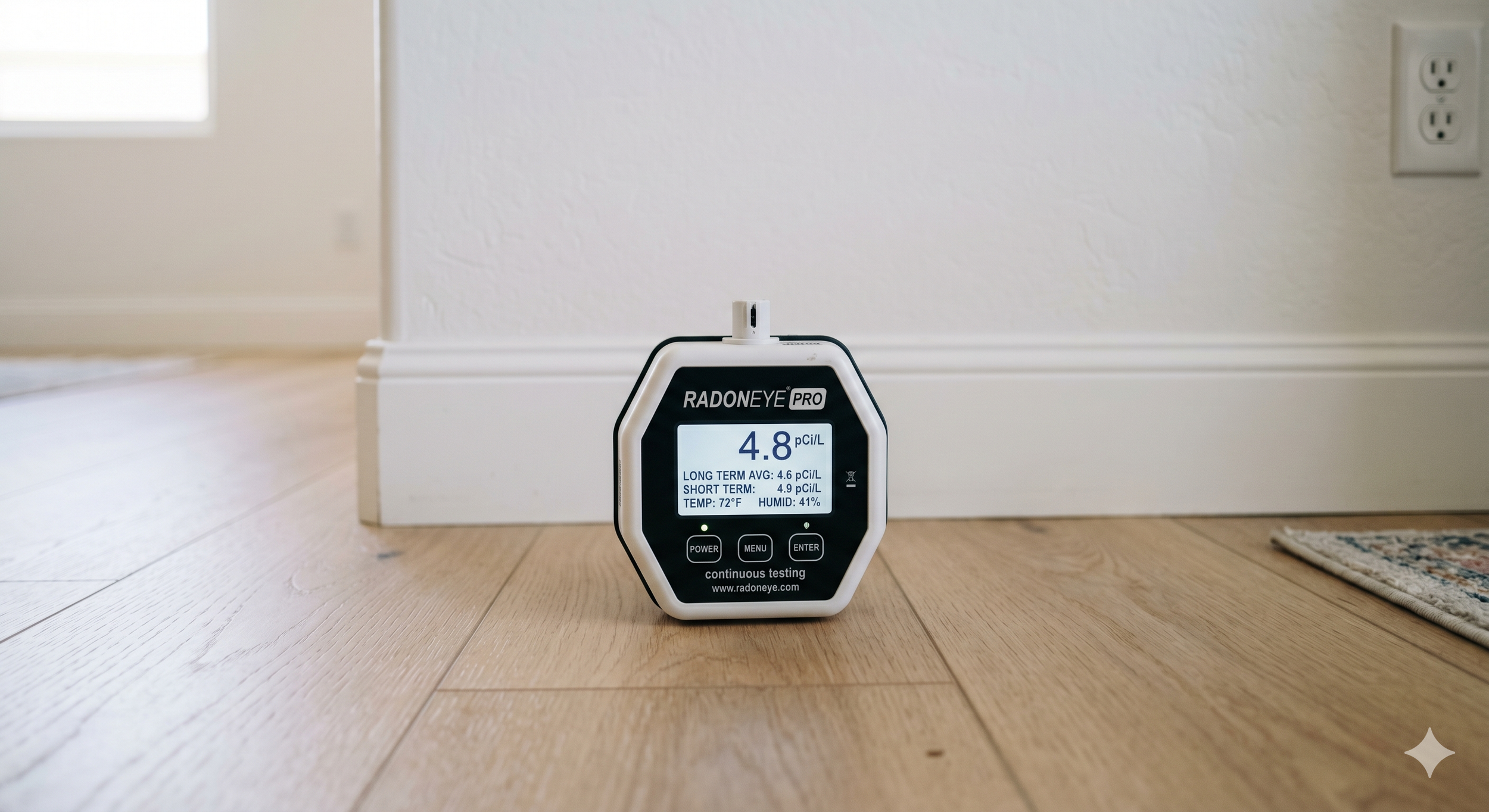
Radon testing monitor device placed in Arizona home for
measurement
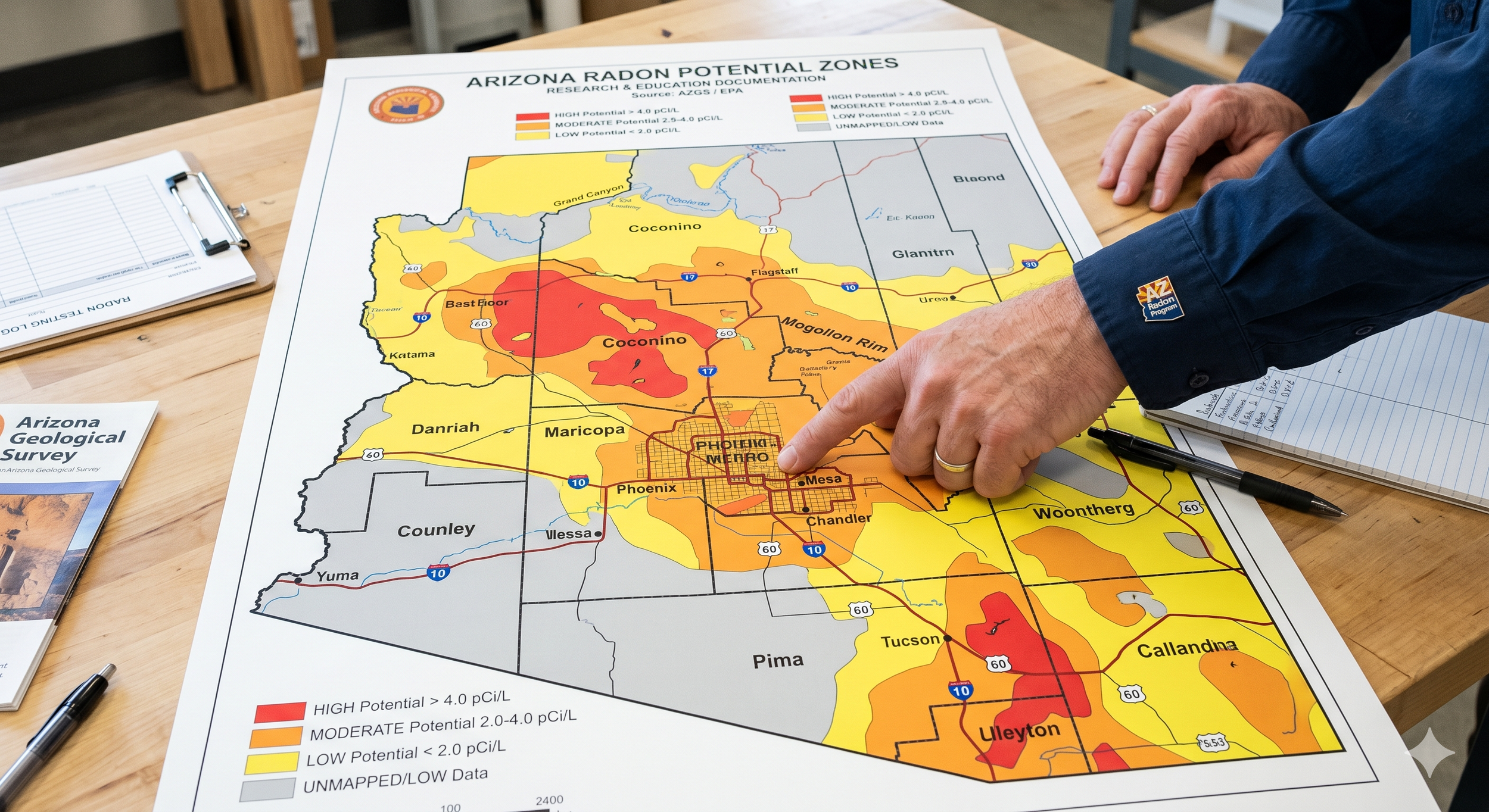
Most people think Arizona doesn't have a radon problem. Our dry climate, low humidity, and indoor heating are supposed to keep radon out. But this assumption is dangerously wrong. Radon has been found in Arizona homes at levels that pose real health risks. If you're buying a home in Arizona, you need to know whether radon testing should be part of your inspection.
Most People Think Arizona Does Not Have a Radon Problem
This myth exists because Arizona's low humidity is different from radon-prone states in the Midwest and Northeast. But radon isn't about humidity. It's about geology and soil composition.
Arizona has granite and uranium-bearing rock in many areas, and radon gas seeps up through soil and into homes regardless of climate.
The EPA has mapped radon zones across the country, and Arizona shows moderate to low risk in most areas. But "low risk" doesn't mean "no risk." Even areas rated as low-risk have had homes with dangerous radon levels. Radon testing is inexpensive compared to the cost of health problems, so the EPA recommends testing in all homes.
What Is Radon and Why Should You Care?
Radon is a colorless, odorless radioactive gas that comes from decaying uranium in soil and rock. You can't see it, smell it, or taste it. Radon enters homes through foundation cracks, gaps around utilities, sump pumps, and crawl spaces. Once inside, radon can build up to dangerous levels.
The EPA says radon is the second leading cause of lung cancer after smoking. Radon damages lung tissue over time, especially with prolonged exposure. If you spend 10 hours a day in a home with high radon levels, your risk increases significantly over years. This is why testing matters, even in Arizona.
Arizona Radon Levels by Area
Arizona's radon risk varies by region and geology. Some areas are higher risk than others, but no Arizona home is radon-proof.
Northern Arizona (Higher Risk)
Northern Arizona, especially around Prescott, Flagstaff, and the high country, has higher radon risk due to granite bedrock and higher elevation. The EPA classifies much of northern Arizona as Zone 1 (highest risk). If you're buying a home in Prescott or Flagstaff, radon testing is especially important.
Higher elevation combined with granite means radon seeps up more readily. Homes in northern Arizona with basements or crawl spaces are particularly vulnerable.
Phoenix Metro (Moderate to Low)
Phoenix, Scottsdale, Mesa, Gilbert, and Chandler are classified as Zone 2 or 3 (moderate to low risk). But moderate and low risk doesn't mean no risk. We've found Phoenix homes with radon levels above the EPA's action level of 4 picocuries per liter (pCi/L).
The soil composition in different Phoenix neighborhoods varies. Some areas have granite closer to the surface, others have more alluvial material. Your specific home's radon level depends on local soil, foundation condition, and ventilation.
Tucson and Southern Arizona
Tucson and southern Arizona are generally Zone 2 or 3. Risk is moderate to low, but testing is still recommended. Southern Arizona's mix of granite and alluvium means radon levels vary by location.
How Radon Testing Works
Radon testing is simple and inexpensive. A radon detector sits in the lowest living area of the home for a set period and measures radon concentration.
Short-Term vs. Long-Term Testing
Short-term testing runs for 2-7 days and gives a quick snapshot of radon levels. Long-term testing runs for 90 days to a year and averages seasonal variations. Short-term tests are faster and cheaper but can miss seasonal fluctuations. Long-term tests are more accurate but take time.
For a home purchase, short-term testing is standard. If a short-term test shows elevated radon, you can do a second short-term test to confirm or move to long-term testing for a clearer picture.
What the Results Mean
EPA action level is 4 pCi/L. Levels below 4 pCi/L are acceptable. Levels between 4 and 10 pCi/L warrant radon reduction. Levels above 10 pCi/L mean immediate action is needed.
If your test shows levels below 4 pCi/L, you're good. If above 4, the seller should install radon mitigation or credit you for the cost. Radon mitigation typically involves a sub-slab depressurization system that vents radon safely out of the home.
How Much Does Radon Testing Cost in Arizona?
Radon testing costs between $150 and $300 for a short-term test, depending on the lab and testing method. Some home inspectors include radon testing in their inspection package. Others charge separately.
Radon mitigation, if needed, costs between $1,200 and $2,500 depending on the home's foundation and complexity. This is expensive but not catastrophic compared to foundation repairs or roof replacement.
What to Do If Radon Levels Are High
If testing shows radon above 4 pCi/L, the seller is responsible for mitigation in most Arizona real state negotiations. The buyer can ask the seller to install a radon mitigation system before closing or request a credit toward the cost.
Radon mitigation involves installing a vent pipe that runs from beneath the foundation to above the roofline, with a fan that depressurizes the soil and vents radon outside. The system reduces radon levels by 50-99%, depending on the home's construction.
After mitigation is complete, you should retest to confirm the system works. Most homes achieve levels below 2 pCi/L after mitigation.
Should Arizona Homebuyers Test for Radon?
Yes. Even in low-risk areas, radon testing is inexpensive insurance against health risk. The EPA recommends testing all homes. Arizona's moderate-to-low risk doesn't mean your home is safe.
Testing takes a few days, doesn't interrupt your inspection schedule, and costs less than a home inspection itself. If your home passes, you're done. If it doesn't, you have time to negotiate mitigation before closing.
Add Radon Testing to Your Home Inspection
Radon testing should be part of your Arizona home inspection package. When you schedule your inspection, ask for radon testing. For a Mesa home inspection or any Arizona home, radon is worth including.
Desert State Home Inspections can arrange radon testing as part of your inspection or separately if you prefer. Short-term testing gives you results before your inspection contingency closes, so you have time to act.
Call Marc at (480) 585-6456 to discuss radon testing, or schedule your inspection with radon testing included. It's the smart move for protecting your family's health.
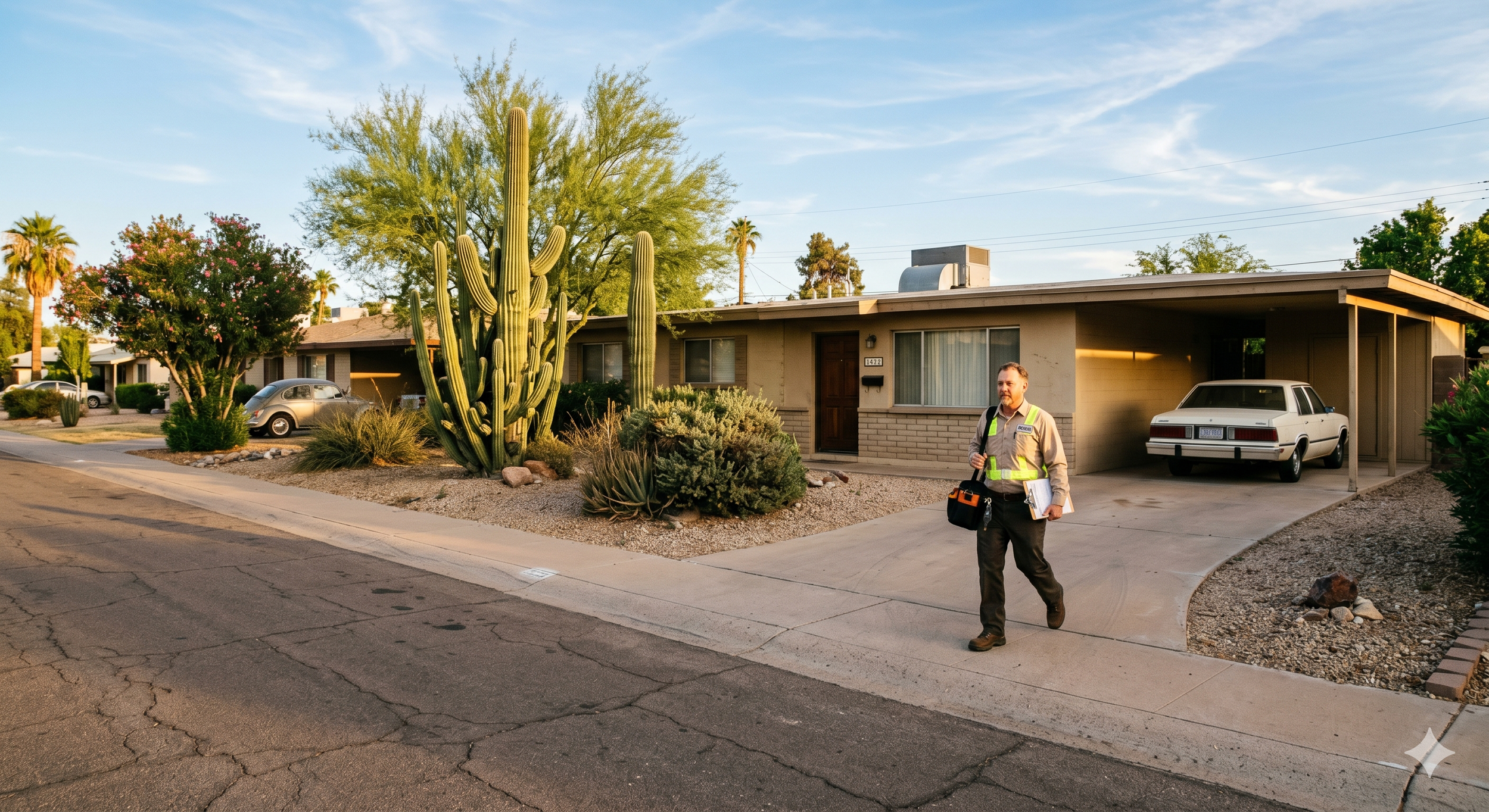
Mesa AZ Home Inspection: The Complete Buyer's Guide
Established Mesa Arizona ranch home being prepared for home inspection
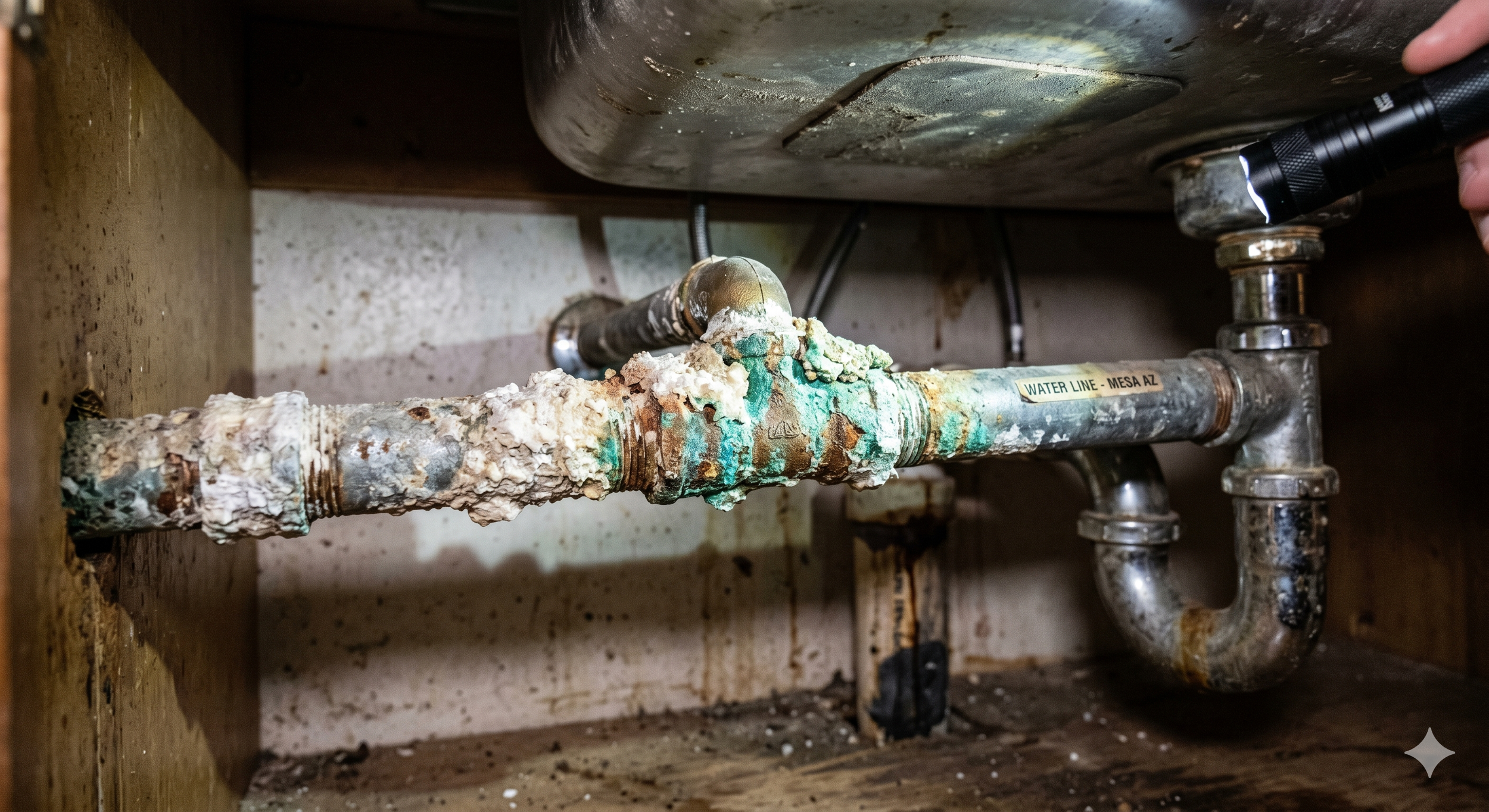
Mesa is Arizona's third-largest city and one of the most diverse real estate markets in the Valley.
You can find new builds, historic 1950s homes, brand-new developments, and everything in between. This diversity makes Mesa inspections interesting but also complex. Your inspector needs to know the difference between a solid 1960s brick home and a foreclosure that sat vacant, between a tastefully updated home and one with DIY disasters hidden in the walls.
Mesa Has Some of the Most Diverse Housing Stock in the Valley
Mesa's age and size mean neighborhoods range from over 70 years old to brand-new. North Mesa around Tempe has mature neighborhoods with solid homes. Central Mesa has mid-century homes with character and good bones. East Mesa boomed in the 2000s with new construction, and now Mesa's south and west sides are seeing development again.
This diversity is an advantage and a challenge. An advantage because there's something for every budget. A challenge because what you're buying varies wildly. A Mesa home built in 1962 is fundamentally different from one built in 2022. Inspection priorities shift completely depending on the home's age and history.
Older Mesa Homes vs. New Developments
The age of your Mesa home shapes everything about the inspection, from foundation concerns to electrical safety.
What to Expect in Homes Built Before 1990
Older Mesa homes have charm and solid construction, but they come with aging systems.
Homes from the 1960s and 1970s often have original electrical panels rated at lower amperage than modern homes need. Today's families use more electrical power for AC, appliances, and devices. An older panel might be inadequate, requiring an upgrade before you can safely power your home.
Roofing on older Mesa homes is often original or near the end of its life. Tile roofs last 30-40 years if maintained, so a roof from 1990 is due for replacement soon. Asphalt composition roofs last 15-20 years. Water heaters over 10 years old are on borrowed time. Plumbing is vulnerable to hard water damage and corrosion, especially if it's original copper.
Older Mesa homes also tend to have smaller AC units designed for lower cooling loads. Modern homes use better insulation and design, so older homes need more AC capacity. An original 2-ton unit from 1980 might be struggling in today's heat.
East Mesa New Construction Concerns
East Mesa's rapid development brought new homes, but new isn't always better. Some builders prioritize speed over quality. New construction in East Mesa sometimes has grading problems that create drainage issues, rushed HVAC installation with leaky ducts, and shortcuts in insulation and caulking.
New homes should be tighter and more efficient, but only if built correctly. We've found East Mesa new construction with foundation cracks within the first year due to poor soil preparation, AC systems that can't keep up because of installation errors, and electrical work that violates code. Independent inspection catches these problems while the builder is still under warranty.
Common Issues in Mesa Home Inspections
Mesa's age, diverse construction standards, and desert conditions create inspection challenges specific to the area.
Hard Water Damage and Pipe Corrosion
Mesa's water is hard, and older plumbing pays the price. We regularly find pinhole leaks in copper piping, especially in homes built in the 1990s and early 2000s. Hard water minerals coat the inside of pipes, reducing water flow and eventually causing leaks that damage walls and ceilings.
Homes with visible corrosion on exposed copper pipes, low water pressure, or discolored water have hard water problems. Some homes need replumbing, which is expensive. Your inspection report should document the extent of the problem so you know what to budget for.
Aging HVAC Systems
Most homes in Mesa over 12 years old have aging AC systems. Mesa summers are brutal, and systems that worked fine five years ago are now struggling. Refrigerant is more expensive, efficiency is lower, and breakdowns are more common. An AC system over 15 years old should factor into your offer negotiation.
We check for proper refrigerant levels, test the system at full load, and look for signs of leaks or corrosion. A system that seems to work but is straining may be close to failure.
Flat Roof Problems in Older Neighborhoods
Older Mesa neighborhoods have flat-roofed homes, either tarred composition roofs or old built-up roofs. These roofs are cheap to replace but need regular maintenance. We look for ponding (water pooling on the roof), cracks, blistering, and deterioration. A flat roof in poor condition will leak during monsoon season.
Some homeowners patch flat roofs rather than replacing them, which creates a short-term solution with long-term cost. If a roof shows major damage, budget for replacement. Flat roof systems might be under warranty but typically last 10-15 years before needing replacement.
Termite Activity in Established Areas
Older Mesa neighborhoods often show signs of past termite activity. Arizona termites are common, and older homes were sometimes treated with termite systems that are now obsolete.
We look for mud tubes, wood damage, and evidence of treatment. Some homes need current termite treatment, and some just need monitoring.
A termite inspection is separate from a standard home inspection and should be part of your inspection package in Mesa. Termite damage is expensive to repair if extensive, so catching it early is important.
East Valley Concerns Every Mesa Buyer Should Know
Mesa sits in the East Valley, which has higher heat stress than central Phoenix and more monsoon wind impact than north Scottsdale. This affects roofing longevity, foundation stability, and HVAC performance.
Monsoon storms hit Mesa hard from July through September. Wind speeds can exceed 50 mph, and dust storms are intense. Loose or aging roof shingles become hazards in these conditions.
Stucco cracks let water in during storm activity. Gutters get clogged with dust and fail to drain properly.
The soil in Mesa is similar to Gilbert's expansive clay. Foundation movement is common, especially in older neighborhoods where soil wasn't properly prepared. Cracks in concrete, settling, and uneven floors show up in inspections regularly.
Schedule Your Mesa Home Inspection
A Mesa home inspection is your foundation for a good real estate decision. Mesa's diverse housing stock means you need an inspector who understands everything from vintage 1950s brick homes to brand-new developments.
Desert State Home Inspections has completed hundreds of inspections across Mesa and knows the city's neighborhoods, construction patterns, and common issues. We'll give you a clear picture of what you're buying and what to budget for after closing.
Call Marc at (480) 585-6456 to schedule your Mesa inspection, or book online. We'll get you the information you need to buy with confidence.
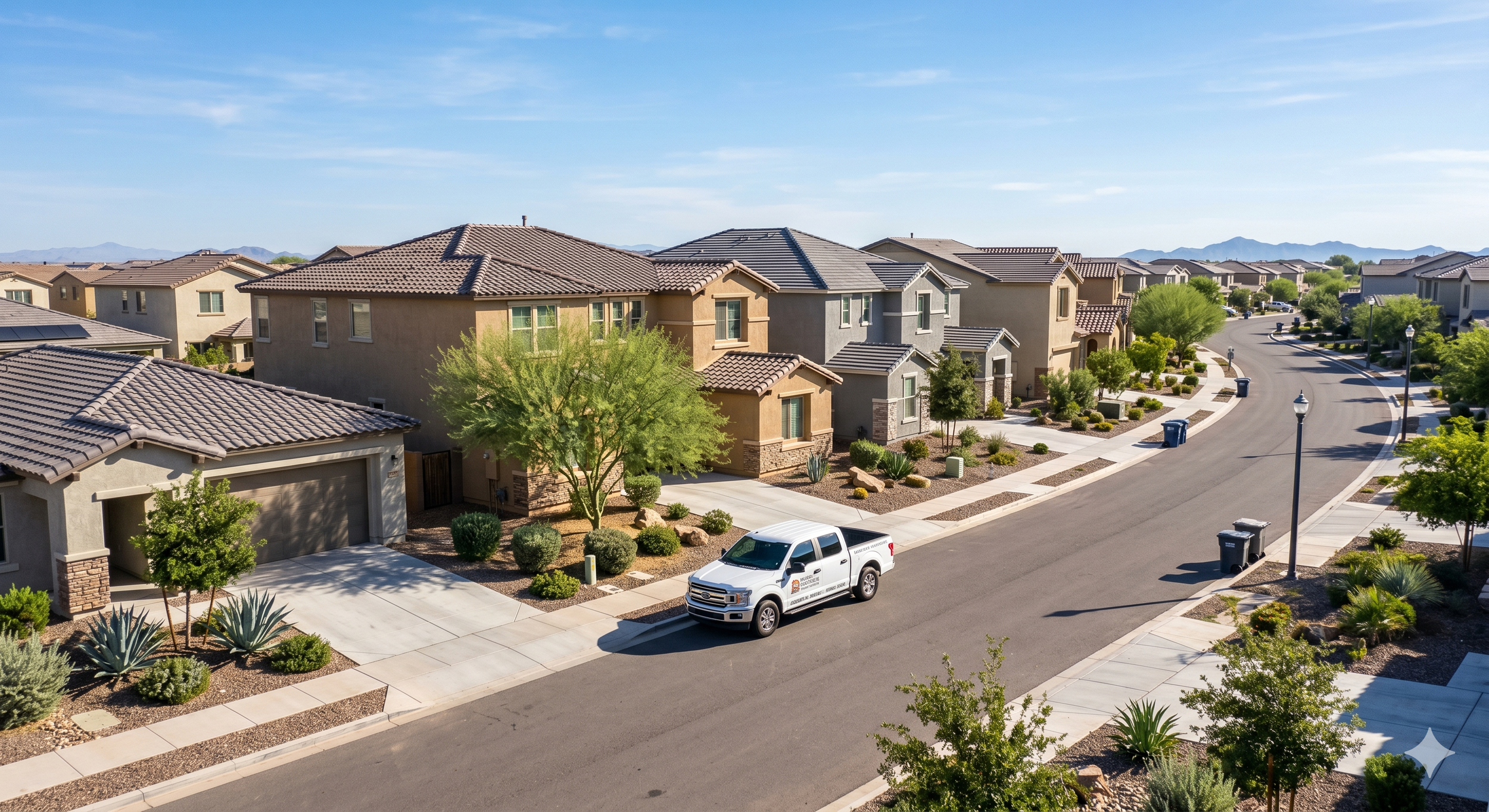
Gilbert AZ Home Inspection Guide: What Buyers in Growing Communities Need to Know
New home development in Gilbert Arizona where home inspections are conducted

Gilbert is one of Arizona's fastest-growing cities, and for good reason. Young families, retirees, and professionals are moving here in droves because of the excellent schools, active community, and reasonable prices compared to Scottsdale or Phoenix. But rapid growth means your home inspection in Gilbert needs to address both the latest construction issues and the quirks of the different neighborhoods.
Gilbert Is One of Arizona's Fastest-Growing Cities
Gilbert's population has nearly tripled in the last 25 years. Whole neighborhoods have popped up in the last decade, and dozens of new subdivisions are under development. This growth creates unique challenges for home buyers. You could be looking at a brand-new home in
Gilbert's north end, a ten-year-old home in a mid-range development, or a 1990s home in established south Gilbert. Each age range has different risks and inspection priorities.
The town's rapid expansion also means infrastructure is constantly changing. Roads are being widened, utilities are being upgraded, and community services are spreading across the town.
For buyers, this means you need a home inspector who understands both the new development standards and the older construction patterns that dominate south Gilbert.
New Construction vs. Resale Homes in Gilbert
New construction homes dominate Gilbert's growth, but established neighborhoods still offer solid value. The difference between buying new and resale is important because it changes what you should look for during inspection.
Why New Builds Still Need Inspections
Many buyers assume new construction needs no inspection. This is a dangerous mistake.
Builders want to move homes quickly and cut costs wherever they can. New homes often have rushed grading that leads to drainage problems, foundation settlement issues caused by improper soil preparation, and HVAC systems installed with shortcuts. We've found new builds in Gilbert with missing insulation, improperly sealed ducts, and appliances installed backwards.
A builder's warranty covers manufacturing defects, but it doesn't cover poor grading, orientation issues, or the builder's mistakes during construction. You need an independent inspection before closing so you catch these problems while the builder is still responsible for fixing them.
What to Watch for in Gilbert Resale Homes
Resale homes in Gilbert range from established neighborhoods (1980s to 1990s) to homes built just five years ago. Older resale homes tend to have aging HVAC systems, outdated electrical panels, and foundation settlement common in desert homes. More recent resales may have upgrade issues from amateur renovations done without permits.
Gilbert's desert heat and hard water are brutal on older plumbing and cooling systems. A resale home that's 20 years old often needs an AC overhaul coming soon. Original plumbing may show corrosion from hard water damage. These are expenses to budget for after closing, and your inspection report should flag them so you can make an informed offer.
Common Issues Found in Gilbert Home Inspections
Gilbert's desert location, rapid development, and soil conditions create specific inspection challenges that show up over and over.
Expansive Soil and Foundation Movement
Gilbert sits on expansive clay soil. This soil swells when it gets wet and shrinks when it dries out. The result is foundation movement, cracked concrete, and doors and windows that stick.
During monsoon season (July to September), the soil gets saturated and foundations move.
During our dry months (November to May), the soil shrinks and homes settle.
We look for diagonal cracks in stucco, gaps between the foundation and slab, and uneven concrete in driveways and patios. Minor cracking is normal in Arizona homes, but major cracking or multiple cracks in different directions signals a foundation issue that needs a structural engineer's evaluation. Some homes need foundation repair, which is expensive.
Knowing about this before closing helps you negotiate.
HVAC Systems Working Overtime
Gilbert summers push 115-120 degrees, and the monsoon monsoons bring humidity that makes AC systems work even harder. Most homes over 15 years old have original or aging AC units.
These systems run constantly from May through September, and they fail without warning.
During inspection, we check the age of the AC unit, look for refrigerant leaks, and test the system under load. An AC system over 15 years old should be in your closing cost negotiation or budget for replacement within a few years. Modern units are more efficient and quieter, especially important in Gilbert's heat.
Hard Water Damage on Plumbing
Arizona has some of the hardest water in the country. Minerals build up inside pipes, reducing water flow and eventually causing leaks. Homes built with copper plumbing in the 1990s and early 2000s sometimes show pinhole leaks or corrosion. You can't see this inside walls, but water stains, low water pressure, and tiny pinhole leaks in visible pipes are red flags.
If a home has hard water stains on fixtures and visible corrosion on copper pipes, the hidden plumbing is probably compromised too. Some homes need new plumbing, which is a major expense. Your inspection should catch signs of hard water damage so you can budget for this.
Stucco and Exterior Wear
Gilbert is a stucco-heavy town. Stucco looks great and is common in new construction, but it's vulnerable to cracks that let water behind the exterior. Monsoon season and UV damage from intense sun cause stucco cracks to expand. We look for vertical cracks radiating from windows, separation between stucco and trim, and soft spots in the stucco itself.
Minor cracking is cosmetic, but water intrusion behind stucco is serious. It causes wood rot, mold, and expensive repairs. Larger cracks or cracks near corners and windows need closer evaluation. Budget for stucco repair or repainting if the home has significant damage.
Gilbert Neighborhoods and Developments
Gilbert has distinct zones. North Gilbert (around Chandler Boulevard and north) is newer, with developments like Sonoran Village and Bridging. Central Gilbert has mid-range homes from the 2000s and 2010s. South Gilbert (south of Ray Road) has the oldest established neighborhoods and homes from the 1990s.
New development homes tend to have modern systems but may have construction shortcuts.
Older Gilbert homes are solid but need updated HVAC, plumbing attention, and electrical panel inspection. Mid-age homes (built 2005-2015) usually strike a balance and often offer the best value in Gilbert.
The neighborhood where you buy also affects resale value, school access, and how quickly the property will appreciate. Your inspection should account for the neighborhood's age and development stage.
Schedule Your Gilbert Home Inspection
A Gilbert home inspection is your protection against expensive surprises in Arizona's hottest real estate market. Gilbert homes move fast because demand is high, but that doesn't mean you should skip inspection or use a rushed inspector.
Desert State Home Inspections has completed hundreds of inspections in Gilbert and knows the city's construction patterns, soil conditions, and common issues. We'll walk through the home with you, explain what we find, and provide a detailed report you can use to negotiate or budget for repairs.
Whether it's a new construction inspection or a resale home, you need someone who understands Arizona. Call Marc at (480) 585-6456 to schedule your Gilbert inspection, or schedule online.
Do I Need a Home Inspection? What Every Arizona Home Buyer Should Know
You found a home you love in the Phoenix Valley, your offer was accepted, and now you're staring at a list of things that need to happen before closing. One of them is the home inspection. And you might be asking: do I really need one? Is it worth the money? Can I just skip it and save a few hundred dollars?
The short answer is yes, you need one. The longer answer explains why skipping a home inspection in Arizona is one of the riskiest financial decisions you can make as a buyer, what actually happens during the inspection process, and how to get the most value from it.
Why You Need a Home Inspection in Arizona
Arizona homes face environmental conditions that most of the country never deals with. The combination of extreme heat, monsoon storms, termites, hard water, expansive soil, and intense UV exposure creates a unique set of problems that aren't visible during a showing or an open house.
You can't see what's behind the walls. A home might look beautiful on the surface. Fresh paint, new flooring, and staged furniture can mask real problems. Your inspector evaluates the systems and structures that actually make the house function: the roof, foundation, electrical, plumbing, HVAC, and more. These are the components that cost $5,000 to $25,000+ to repair or replace when they fail.
Arizona-specific hazards are real. Subterranean termites operate year-round in the Phoenix Valley. Expansive soil causes foundation movement. Roofing underlayment deteriorates faster in Arizona's extreme UV exposure. Polybutylene plumbing pipes (installed in thousands of Valley homes in the 1980s and 1990s) are prone to sudden failure. An experienced Arizona inspector knows exactly where to look for these regional issues.
It's your biggest financial protection during the transaction. The home inspection is typically the most thorough evaluation of the property that occurs during the entire buying process. The appraisal verifies value. The inspection verifies condition. Without it, you're relying on the seller's disclosure and your own untrained eye to identify potentially tens of thousands of dollars in hidden issues.
What to Expect During a Home Inspection
If you've never been through a home inspection before, here's what the process looks like from start to finish.
Before the Inspection
Once your offer is accepted in Arizona, the standard AAR (Arizona Association of Realtors) contract gives you a 10-day inspection period. You'll want to schedule your inspection as early in this window as possible to give yourself maximum time to review findings and negotiate if needed.
When you book the inspection, let the company know the property's square footage, age, and whether you need any add-on services like termite, pool, or sewer scope inspections. This helps them schedule the right amount of time and ensure the inspector is prepared.
During the Inspection
A standard home inspection takes 2 to 4 hours depending on the property's size and condition. You are encouraged to attend the inspection. Walking the property with the inspector gives you the opportunity to ask questions, see issues firsthand, and understand the context behind each finding.
Your inspector will methodically evaluate every accessible system and component in the home:
Exterior: Roof condition, siding/stucco, grading and drainage, driveways, walkways, fencing, and the overall condition of exterior surfaces. In Arizona, your inspector is specifically looking at monsoon drainage patterns, stucco condition, and UV damage to exposed materials.
Interior: Walls, ceilings, floors, windows, doors, stairs, and built-in features. The inspector looks for evidence of water damage, structural movement, and deferred maintenance.
Structural: Foundation, framing, and structural components. Arizona's expansive soil means foundation evaluation is particularly important. Your inspector is looking for cracks, settling, and signs of movement.
Electrical: Service panel, wiring, outlets, switches, and safety devices. Older homes in established Phoenix neighborhoods sometimes have outdated panels or aluminum wiring that presents safety concerns.
Plumbing: Supply pipes, drain pipes, water heater, fixtures, toilets, and water pressure. Arizona's hard water causes accelerated wear on plumbing systems, and your inspector should identify the pipe material throughout the home.
HVAC: Heating and cooling systems, ductwork, thermostats, and filters. Given that Arizona air conditioning runs 6 to 8 months per year, HVAC evaluation is one of the most critical components of a Valley home inspection.
Attic and Insulation: Ventilation, insulation depth, moisture, and general attic condition. Attic temperatures in Arizona homes can exceed 150 degrees in summer, making proper ventilation and insulation essential.
Additional Systems: Garage door and opener, built-in appliances, bathroom ventilation, and any accessible crawlspace areas.
After the Inspection
Your inspector delivers a written report documenting every finding with descriptions and photographs. In Arizona's competitive market, report turnaround time matters. Same-day or next-day delivery gives you maximum time within your 10-day inspection period to review, get repair estimates, and respond through the BINSR process.
The report categorizes findings by severity. Safety hazards and major defects require the most attention. Minor maintenance items and cosmetic observations are noted but typically don't affect negotiations.
Home Inspection Tips for Arizona Buyers
Getting the inspection is step one. Getting the most from it requires some preparation.
Schedule early in your inspection period. Don't wait until day 7 of a 10-day window. If your inspector finds significant issues, you'll need time to get contractor estimates, consult with your agent, and submit your BINSR.
Attend the inspection. Walking the property with your inspector is one of the most educational experiences of the home buying process. You'll learn how the home's systems work, where the shutoffs are, what maintenance to prioritize, and what to watch for over time.
Ask questions. No question is too basic. If your inspector identifies something and you don't understand the significance, ask. A good inspector explains findings in plain language and helps you understand the difference between a minor maintenance item and a serious concern.
Don't panic over the report. Every home has findings. Even new construction homes have issues. The purpose of the inspection isn't to find a "perfect" house. It's to understand the condition of the house you're buying so you can make informed decisions.
Focus on safety and big-ticket items. A dripping faucet and a cracked electrical panel are not equivalent concerns. Prioritize findings that affect safety, structural integrity, and high-cost systems (roof, HVAC, foundation, plumbing, electrical).
Get estimates for major findings. If your inspector identifies a significant issue, getting a repair estimate from a licensed contractor gives you specific numbers to work with during negotiations. "The roof needs repair" is weaker than "the roof needs $12,000 in repairs per XYZ Roofing's estimate."
Consider add-on inspections. In Arizona, a termite inspection is almost always worthwhile. If the home has a pool, a pool inspection can identify equipment issues and safety concerns. For older homes, a sewer scope inspection can reveal pipe deterioration that causes expensive problems later.
When Can You Skip a Home Inspection?
There are very few scenarios where skipping a home inspection makes financial sense, but here are the situations where buyers sometimes consider it:
Competitive bidding wars sometimes pressure buyers to waive the inspection contingency to make their offer more attractive. This is high risk. You're committing to purchase a property without knowing its true condition. If the seller has been covering up a major issue, you own it. In a market where homes routinely sell for $300,000 to $600,000 in the Phoenix Valley, gambling $400 in inspection costs to save time is a decision that can cost you thousands.
Investor purchases with plans for a complete renovation sometimes skip inspections because they intend to replace major systems regardless. Even then, an inspection helps identify issues (like foundation problems or environmental hazards) that affect the scope and cost of the renovation.
The bottom line: unless you're prepared to accept full financial responsibility for whatever condition the home is in, you need a home inspection.
What a Home Inspection Does NOT Cover
Understanding the limits of a standard home inspection prevents surprises:
Cosmetic issues like scuffed floors, paint condition, and minor drywall imperfections are not covered. The inspection focuses on structural, mechanical, and safety items.
Areas that aren't accessible can't be evaluated. If the attic hatch is sealed, the crawlspace entrance is blocked, or personal belongings prevent access to electrical panels, those areas may not be fully inspected.
Specialized systems like solar panels, septic systems, wells, and sprinkler systems may require separate specialized inspections.
Compliance with building codes is not within the standard scope. Your inspector evaluates condition and safety, but does not perform a code compliance review.
Environmental hazards like asbestos, lead paint, radon, and mold testing typically require separate testing by certified specialists. Arizona homes built before 1978 may contain lead-based paint, and asbestos was commonly used in insulation and floor tiles in older Valley homes.
Frequently Asked Questions
Is a home inspection required in Arizona?
A home inspection is not legally required in Arizona, but it is strongly recommended. The standard AAR residential purchase contract includes a 10-day inspection period specifically to give buyers the opportunity to evaluate the property. Skipping the inspection means giving up your most thorough opportunity to identify problems before you take ownership.
How much does a home inspection cost in Arizona?
Standard home inspections in Arizona cost between $300 and $600 for most residential properties, depending on the size and age of the home. Add-on services like termite inspection ($75 to $125), pool inspection ($100 to $200), and sewer scope ($150 to $300) are additional. For a detailed pricing breakdown, check out our complete guide to home inspection costs in Arizona. [INTERNAL LINK to Post #1]
Can a home inspection kill a deal?
A home inspection itself doesn't kill deals. However, the findings from an inspection can lead to negotiations that break down. If the inspection reveals major issues (foundation, roof, HVAC, electrical) and the seller refuses to address them, the buyer may choose to cancel the contract during the inspection period. This is actually the inspection doing its job: protecting you from buying a property with hidden expensive problems.
What's the difference between a home inspection and an appraisal?
An appraisal determines the market value of the home for the lender. It answers: "Is this home worth the purchase price?" A home inspection evaluates the physical condition of the home for the buyer. It answers: "What condition is this home actually in?" Both serve important but completely different purposes. An appraisal is required by the lender. An inspection protects you.
Should I get a home inspection on a brand new home?
Yes. New construction is not exempt from defects. Inspections during the build process (pre-pour, pre-drywall, final) catch construction errors before they're hidden behind walls. Common issues found in new Arizona builds include improper framing, plumbing errors, HVAC installation mistakes, grading and drainage problems, and missing insulation. The cost of a new construction inspection is minimal compared to discovering these issues after your builder warranty expires.
What happens if I waive the home inspection?
If you waive the inspection contingency and later discover major issues, you have very limited legal recourse. You'll be responsible for all repair costs. In Arizona, where homes regularly face issues from extreme heat, termites, hard water, and expansive soil, waiving the inspection is an outsized risk compared to the $300 to $600 cost.
Make Your Biggest Investment with Confidence
A home inspection doesn't tell you whether to buy the house. It tells you what you're buying. With that information, you can negotiate from a position of knowledge, budget for future maintenance, and move in without wondering what's lurking behind the walls.
Desert State Home Inspections has been helping Phoenix Valley buyers make confident decisions for over 25 years. With 25,000+ inspections completed by our team of Arizona state-certified inspectors, we deliver the thoroughness and speed your transaction demands. Same-day and next-day reports keep your deal on track.
Call (480) 585-6456 to schedule your inspection.