
Radon Testing in Arizona: Do You Need It?
Most people think Arizona doesn't have a radon problem. Our dry climate, low humidity, and indoor heating are supposed to keep radon out. But this assumption is dangerously wrong. Radon has been found in Arizona homes at levels that pose real health risks. If you're buying a home in Arizona, you need to know whether radon testing should be part of your inspection.
Most People Think Arizona Does Not Have a Radon Problem
This myth exists because Arizona's low humidity is different from radon-prone states in the Midwest and Northeast. But radon isn't about humidity. It's about geology and soil composition.
Arizona has granite and uranium-bearing rock in many areas, and radon gas seeps up through soil and into homes regardless of climate.
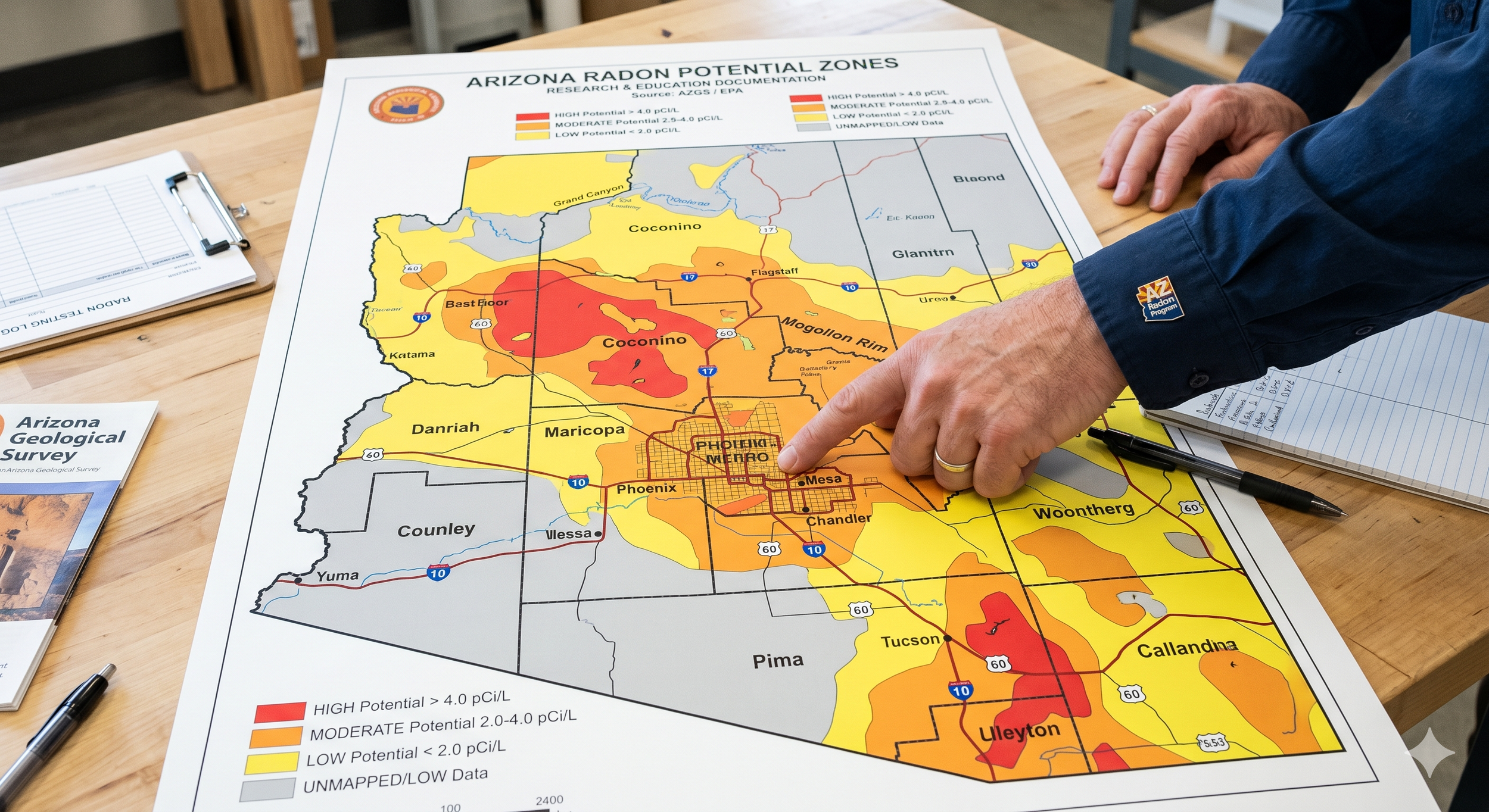
The EPA has mapped radon zones across the country, and Arizona shows moderate to low risk in most areas. But "low risk" doesn't mean "no risk." Even areas rated as low-risk have had homes with dangerous radon levels. Radon testing is inexpensive compared to the cost of health problems, so the EPA recommends testing in all homes.
What Is Radon and Why Should You Care?
Radon is a colorless, odorless radioactive gas that comes from decaying uranium in soil and rock. You can't see it, smell it, or taste it. Radon enters homes through foundation cracks, gaps around utilities, sump pumps, and crawl spaces. Once inside, radon can build up to dangerous levels.
The EPA says radon is the second leading cause of lung cancer after smoking. Radon damages lung tissue over time, especially with prolonged exposure. If you spend 10 hours a day in a home with high radon levels, your risk increases significantly over years. This is why testing matters, even in Arizona.
Arizona Radon Levels by Area
Arizona's radon risk varies by region and geology. Some areas are higher risk than others, but no Arizona home is radon-proof.
Northern Arizona (Higher Risk)
Northern Arizona, especially around Prescott, Flagstaff, and the high country, has higher radon risk due to granite bedrock and higher elevation. The EPA classifies much of northern Arizona as Zone 1 (highest risk). If you're buying a home in Prescott or Flagstaff, radon testing is especially important.
Higher elevation combined with granite means radon seeps up more readily. Homes in northern Arizona with basements or crawl spaces are particularly vulnerable.
Phoenix Metro (Moderate to Low)
Phoenix, Scottsdale, Mesa, Gilbert, and Chandler are classified as Zone 2 or 3 (moderate to low risk). But moderate and low risk doesn't mean no risk. We've found Phoenix homes with radon levels above the EPA's action level of 4 picocuries per liter (pCi/L).
The soil composition in different Phoenix neighborhoods varies. Some areas have granite closer to the surface, others have more alluvial material. Your specific home's radon level depends on local soil, foundation condition, and ventilation.
Tucson and Southern Arizona
Tucson and southern Arizona are generally Zone 2 or 3. Risk is moderate to low, but testing is still recommended. Southern Arizona's mix of granite and alluvium means radon levels vary by location.
How Radon Testing Works
Radon testing is simple and inexpensive. A radon detector sits in the lowest living area of the home for a set period and measures radon concentration.
Short-Term vs. Long-Term Testing
Short-term testing runs for 2-7 days and gives a quick snapshot of radon levels. Long-term testing runs for 90 days to a year and averages seasonal variations. Short-term tests are faster and cheaper but can miss seasonal fluctuations. Long-term tests are more accurate but take time.
For a home purchase, short-term testing is standard. If a short-term test shows elevated radon, you can do a second short-term test to confirm or move to long-term testing for a clearer picture.
What the Results Mean
EPA action level is 4 pCi/L. Levels below 4 pCi/L are acceptable. Levels between 4 and 10 pCi/L warrant radon reduction. Levels above 10 pCi/L mean immediate action is needed.
If your test shows levels below 4 pCi/L, you're good. If above 4, the seller should install radon mitigation or credit you for the cost. Radon mitigation typically involves a sub-slab depressurization system that vents radon safely out of the home.
How Much Does Radon Testing Cost in Arizona?
Radon testing costs between $150 and $300 for a short-term test, depending on the lab and testing method. Some home inspectors include radon testing in their inspection package. Others charge separately.
Radon mitigation, if needed, costs between $1,200 and $2,500 depending on the home's foundation and complexity. This is expensive but not catastrophic compared to foundation repairs or roof replacement.
What to Do If Radon Levels Are High
If testing shows radon above 4 pCi/L, the seller is responsible for mitigation in most Arizona real state negotiations. The buyer can ask the seller to install a radon mitigation system before closing or request a credit toward the cost.
Radon mitigation involves installing a vent pipe that runs from beneath the foundation to above the roofline, with a fan that depressurizes the soil and vents radon outside. The system reduces radon levels by 50-99%, depending on the home's construction.
After mitigation is complete, you should retest to confirm the system works. Most homes achieve levels below 2 pCi/L after mitigation.
Should Arizona Homebuyers Test for Radon?
Yes. Even in low-risk areas, radon testing is inexpensive insurance against health risk. The EPA recommends testing all homes. Arizona's moderate-to-low risk doesn't mean your home is safe.
Testing takes a few days, doesn't interrupt your inspection schedule, and costs less than a home inspection itself. If your home passes, you're done. If it doesn't, you have time to negotiate mitigation before closing.
Add Radon Testing to Your Home Inspection
Radon testing should be part of your Arizona home inspection package. When you schedule your inspection, ask for radon testing. For a Mesa home inspection or any Arizona home, radon is worth including.
Desert State Home Inspections can arrange radon testing as part of your inspection or separately if you prefer. Short-term testing gives you results before your inspection contingency closes, so you have time to act.
Call Marc at (480) 585-6456 to discuss radon testing, or schedule your inspection with radon testing included. It's the smart move for protecting your family's health.