
Mesa AZ Home Inspection: The Complete Buyer's Guide
Mesa is Arizona's third-largest city and one of the most diverse real estate markets in the Valley.
You can find new builds, historic 1950s homes, brand-new developments, and everything in between. This diversity makes Mesa inspections interesting but also complex. Your inspector needs to know the difference between a solid 1960s brick home and a foreclosure that sat vacant, between a tastefully updated home and one with DIY disasters hidden in the walls.
Mesa Has Some of the Most Diverse Housing Stock in the Valley
Mesa's age and size mean neighborhoods range from over 70 years old to brand-new. North Mesa around Tempe has mature neighborhoods with solid homes. Central Mesa has mid-century homes with character and good bones. East Mesa boomed in the 2000s with new construction, and now Mesa's south and west sides are seeing development again.
This diversity is an advantage and a challenge. An advantage because there's something for every budget. A challenge because what you're buying varies wildly. A Mesa home built in 1962 is fundamentally different from one built in 2022. Inspection priorities shift completely depending on the home's age and history.
Older Mesa Homes vs. New Developments
The age of your Mesa home shapes everything about the inspection, from foundation concerns to electrical safety.
What to Expect in Homes Built Before 1990
Older Mesa homes have charm and solid construction, but they come with aging systems.
Homes from the 1960s and 1970s often have original electrical panels rated at lower amperage than modern homes need. Today's families use more electrical power for AC, appliances, and devices. An older panel might be inadequate, requiring an upgrade before you can safely power your home.
Roofing on older Mesa homes is often original or near the end of its life. Tile roofs last 30-40 years if maintained, so a roof from 1990 is due for replacement soon. Asphalt composition roofs last 15-20 years. Water heaters over 10 years old are on borrowed time. Plumbing is vulnerable to hard water damage and corrosion, especially if it's original copper.
Older Mesa homes also tend to have smaller AC units designed for lower cooling loads. Modern homes use better insulation and design, so older homes need more AC capacity. An original 2-ton unit from 1980 might be struggling in today's heat.
East Mesa New Construction Concerns
East Mesa's rapid development brought new homes, but new isn't always better. Some builders prioritize speed over quality. New construction in East Mesa sometimes has grading problems that create drainage issues, rushed HVAC installation with leaky ducts, and shortcuts in insulation and caulking.
New homes should be tighter and more efficient, but only if built correctly. We've found East Mesa new construction with foundation cracks within the first year due to poor soil preparation, AC systems that can't keep up because of installation errors, and electrical work that violates code. Independent inspection catches these problems while the builder is still under warranty.
Common Issues in Mesa Home Inspections
Mesa's age, diverse construction standards, and desert conditions create inspection challenges specific to the area.
Hard Water Damage and Pipe Corrosion
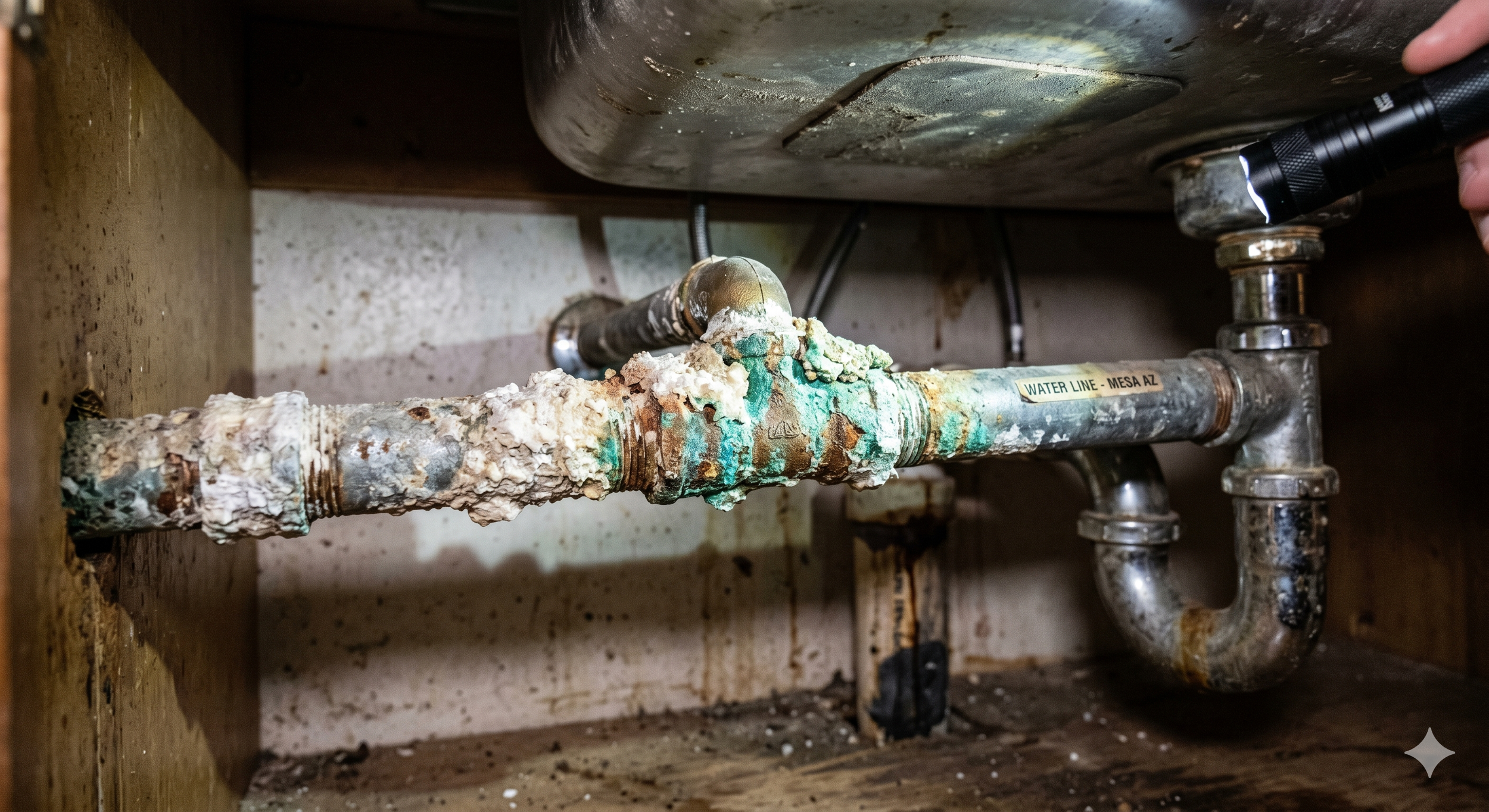
Mesa's water is hard, and older plumbing pays the price. We regularly find pinhole leaks in copper piping, especially in homes built in the 1990s and early 2000s. Hard water minerals coat the inside of pipes, reducing water flow and eventually causing leaks that damage walls and ceilings.
Homes with visible corrosion on exposed copper pipes, low water pressure, or discolored water have hard water problems. Some homes need replumbing, which is expensive. Your inspection report should document the extent of the problem so you know what to budget for.
Aging HVAC Systems
Most homes in Mesa over 12 years old have aging AC systems. Mesa summers are brutal, and systems that worked fine five years ago are now struggling. Refrigerant is more expensive, efficiency is lower, and breakdowns are more common. An AC system over 15 years old should factor into your offer negotiation.
We check for proper refrigerant levels, test the system at full load, and look for signs of leaks or corrosion. A system that seems to work but is straining may be close to failure.
Flat Roof Problems in Older Neighborhoods
Older Mesa neighborhoods have flat-roofed homes, either tarred composition roofs or old built-up roofs. These roofs are cheap to replace but need regular maintenance. We look for ponding (water pooling on the roof), cracks, blistering, and deterioration. A flat roof in poor condition will leak during monsoon season.
Some homeowners patch flat roofs rather than replacing them, which creates a short-term solution with long-term cost. If a roof shows major damage, budget for replacement. Flat roof systems might be under warranty but typically last 10-15 years before needing replacement.
Termite Activity in Established Areas
Older Mesa neighborhoods often show signs of past termite activity. Arizona termites are common, and older homes were sometimes treated with termite systems that are now obsolete.
We look for mud tubes, wood damage, and evidence of treatment. Some homes need current termite treatment, and some just need monitoring.
A termite inspection is separate from a standard home inspection and should be part of your inspection package in Mesa. Termite damage is expensive to repair if extensive, so catching it early is important.
East Valley Concerns Every Mesa Buyer Should Know
Mesa sits in the East Valley, which has higher heat stress than central Phoenix and more monsoon wind impact than north Scottsdale. This affects roofing longevity, foundation stability, and HVAC performance.
Monsoon storms hit Mesa hard from July through September. Wind speeds can exceed 50 mph, and dust storms are intense. Loose or aging roof shingles become hazards in these conditions.
Stucco cracks let water in during storm activity. Gutters get clogged with dust and fail to drain properly.
The soil in Mesa is similar to Gilbert's expansive clay. Foundation movement is common, especially in older neighborhoods where soil wasn't properly prepared. Cracks in concrete, settling, and uneven floors show up in inspections regularly.
Schedule Your Mesa Home Inspection
A Mesa home inspection is your foundation for a good real estate decision. Mesa's diverse housing stock means you need an inspector who understands everything from vintage 1950s brick homes to brand-new developments.
Desert State Home Inspections has completed hundreds of inspections across Mesa and knows the city's neighborhoods, construction patterns, and common issues. We'll give you a clear picture of what you're buying and what to budget for after closing.
Call Marc at (480) 585-6456 to schedule your Mesa inspection, or book online. We'll get you the information you need to buy with confidence.